


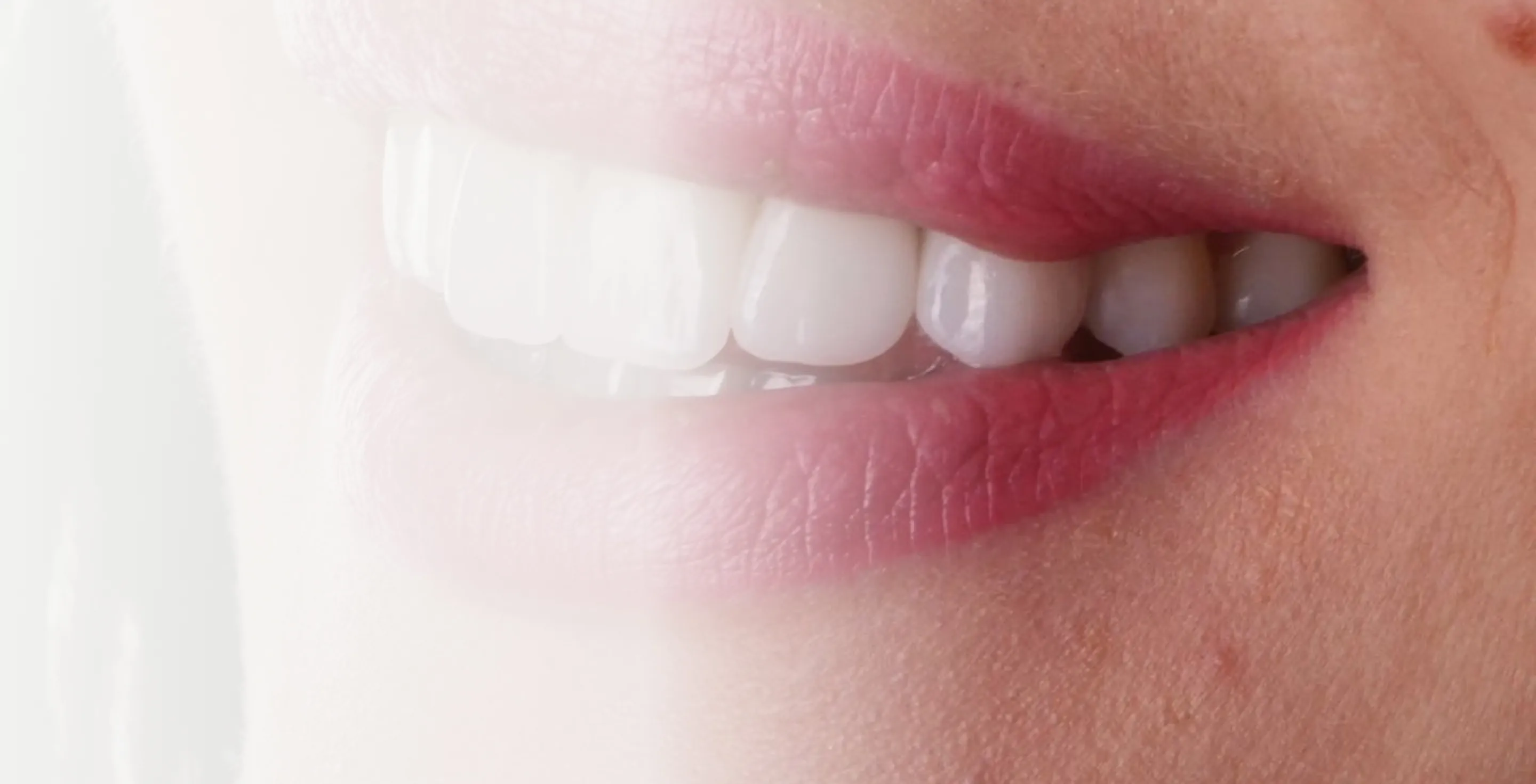
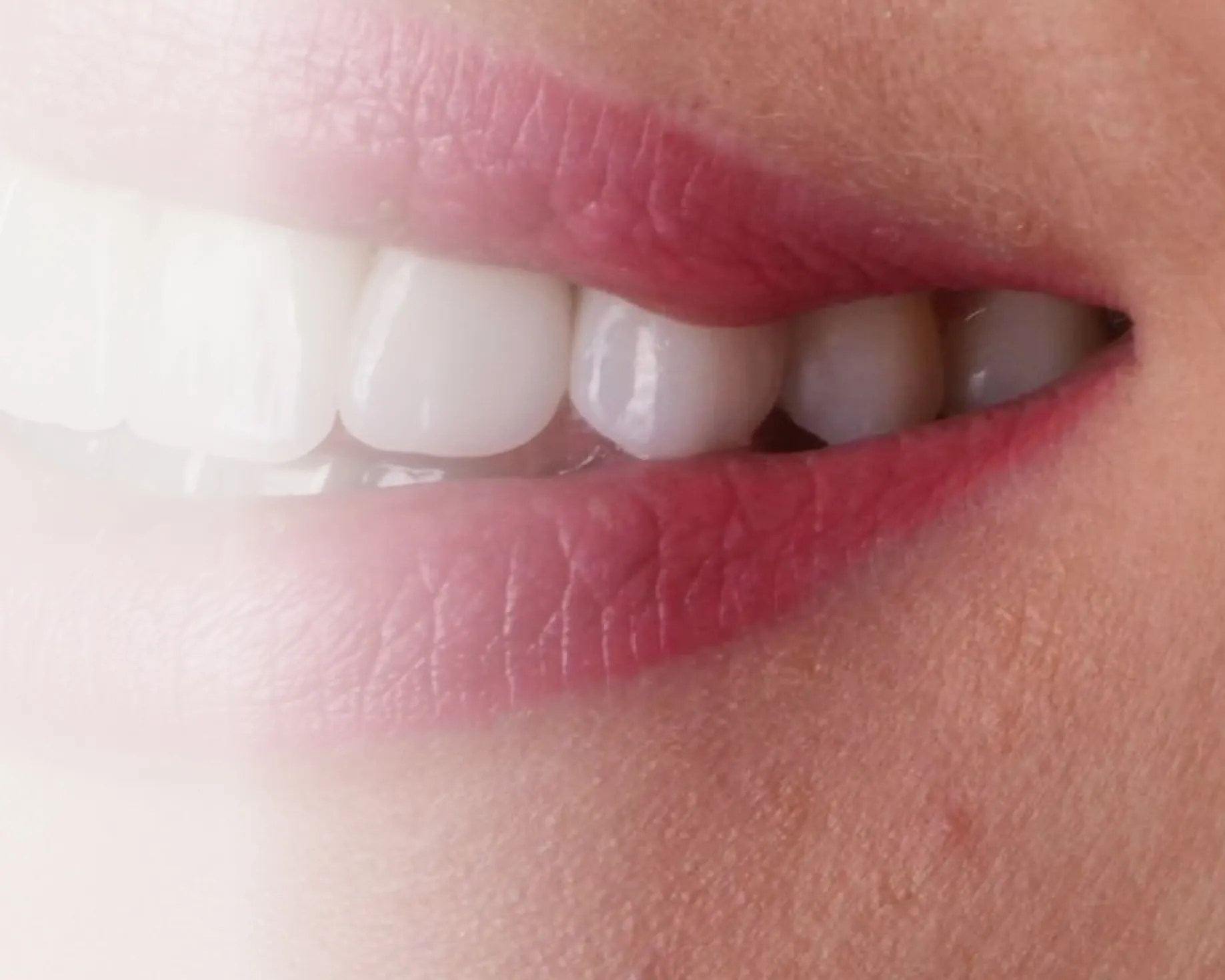
Przypadki „przed i po”
Prawdziwe uśmiechy. Prawdziwe historie. Zobacz, jak wyglądają efekty naszej pracy
Aesthetic dentistry Przed/Po
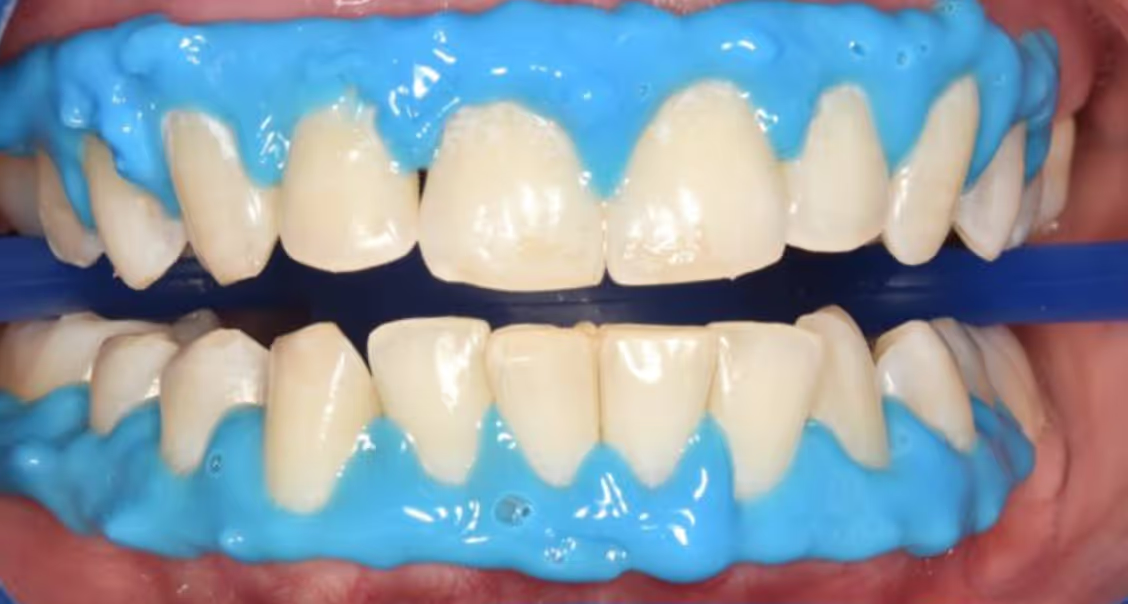
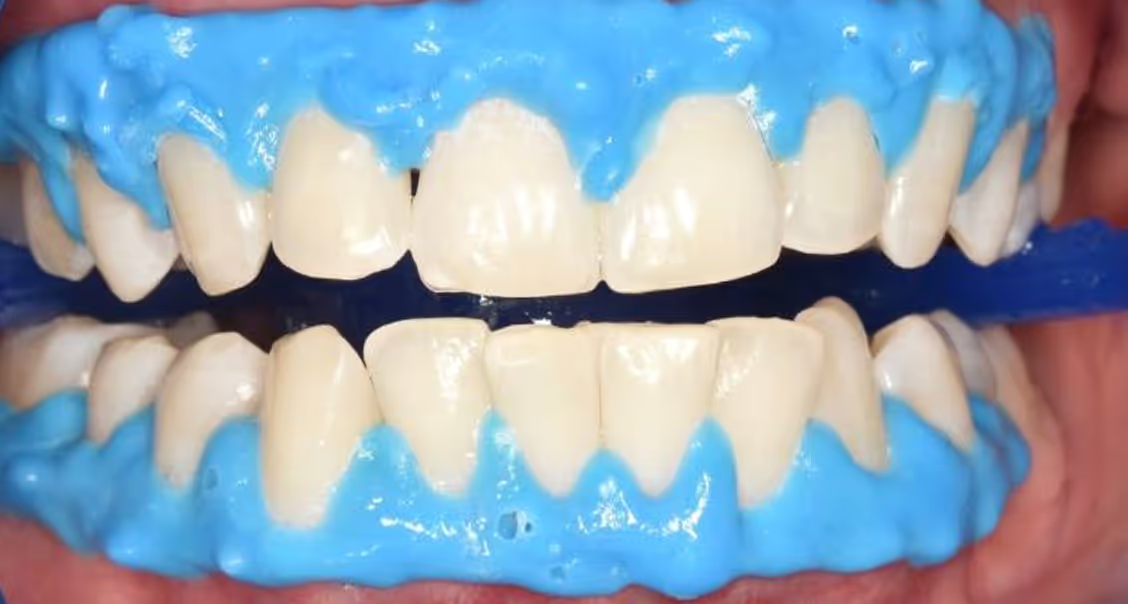
The patient came in wanting to lighten their teeth and make their smile brighter.
Main complaints — dull enamel shade and uneven color.
A clinical examination was performed to rule out contraindications to the procedure. The condition of the enamel and gums was assessed. Professional hygiene was performed. The baseline tooth shade was determined.
A special isolating gel was applied to the gums to protect the soft tissues.
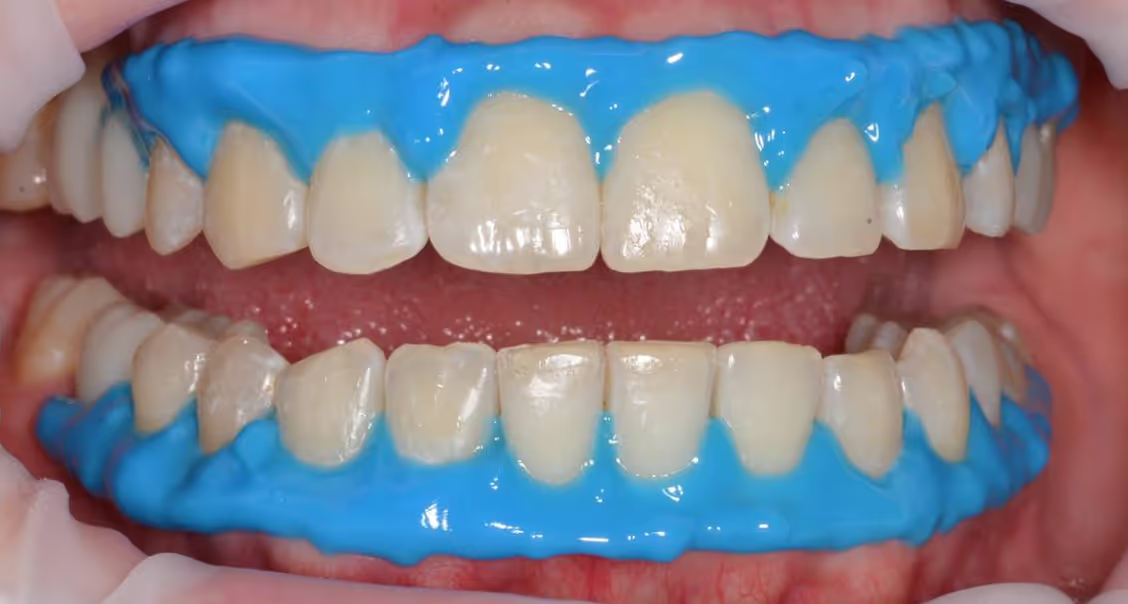
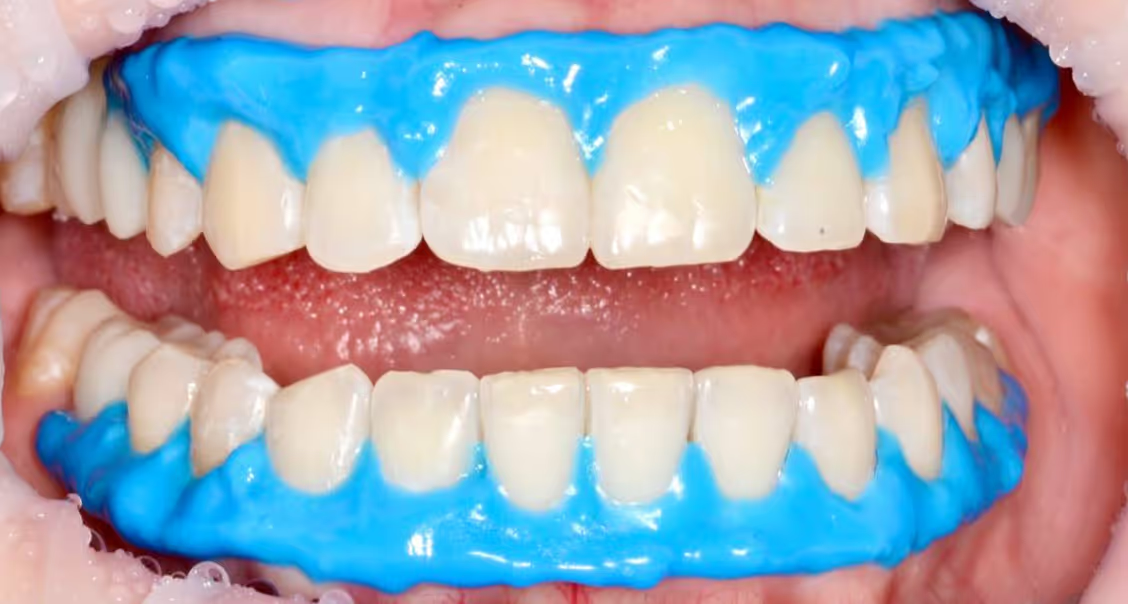
The patient came in to improve the aesthetics of their smile. The main wishes were to lighten the teeth, remove the yellow tint, and make the color more even.
A clinical examination was performed to rule out contraindications to whitening.
Professional hygiene was performed to remove plaque and dental deposits. The baseline tooth shade was determined.
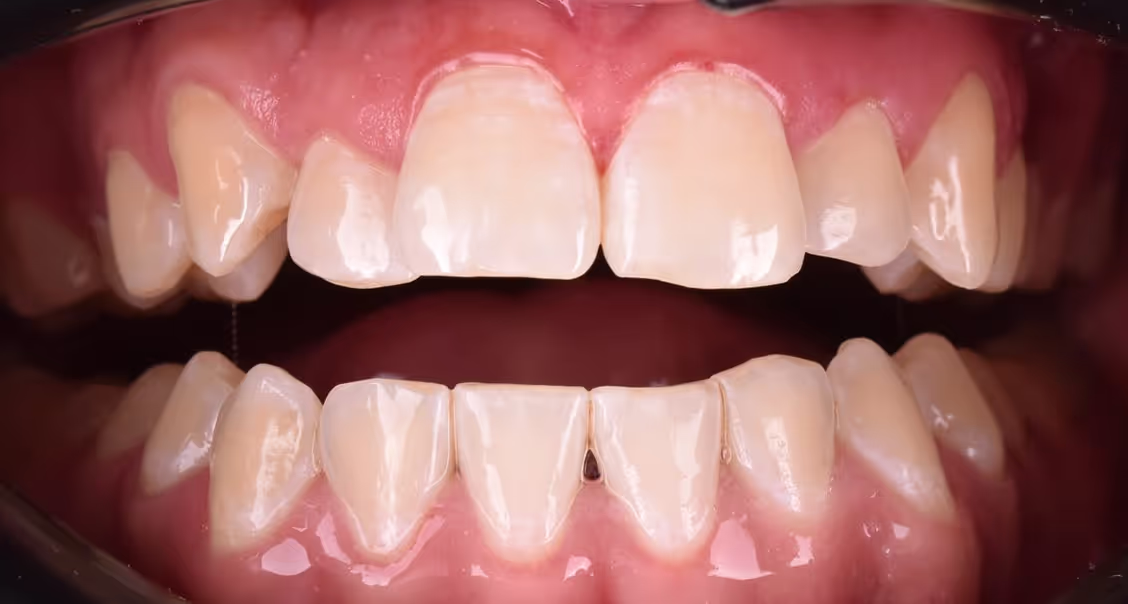
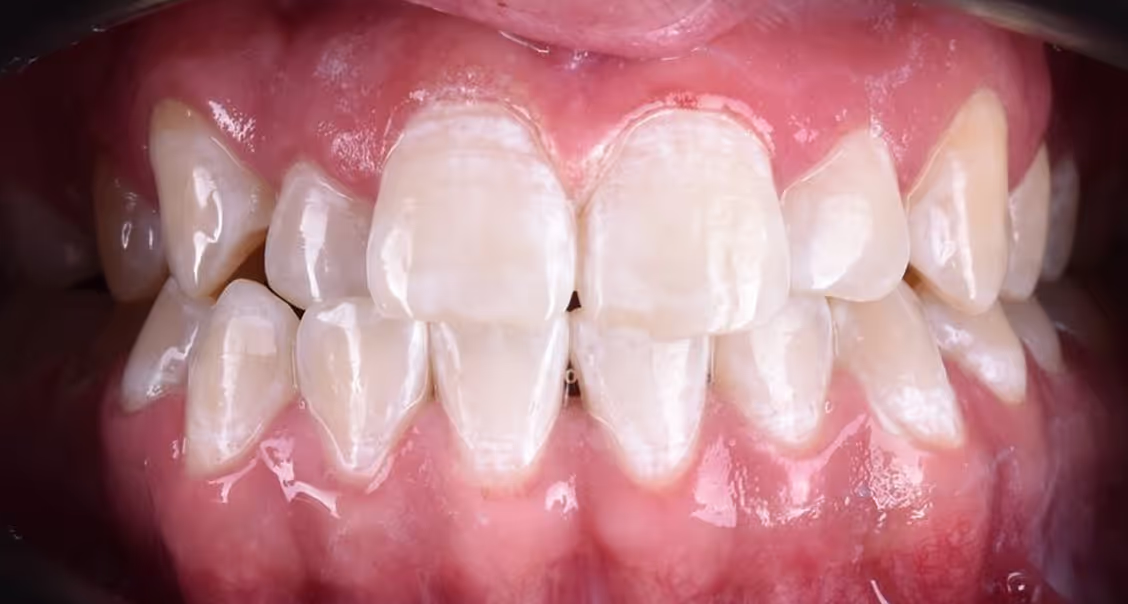
The patient came in wanting to lighten their teeth and improve the aesthetics of their smile.
Main complaints — uneven enamel shade and yellowish tooth tone.
A clinical examination was performed to assess the condition of the enamel and gums. Contraindications to whitening were ruled out. The baseline tooth shade was determined.
A special light-cured barrier was applied to the gums to protect the soft tissues.
Orthodontics Przed/Po
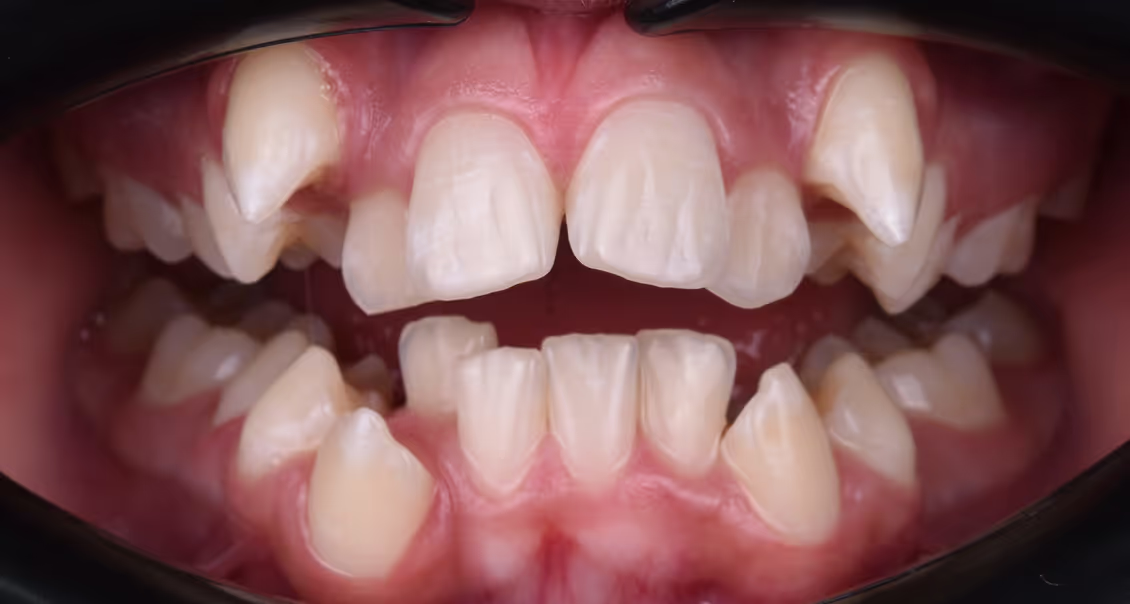
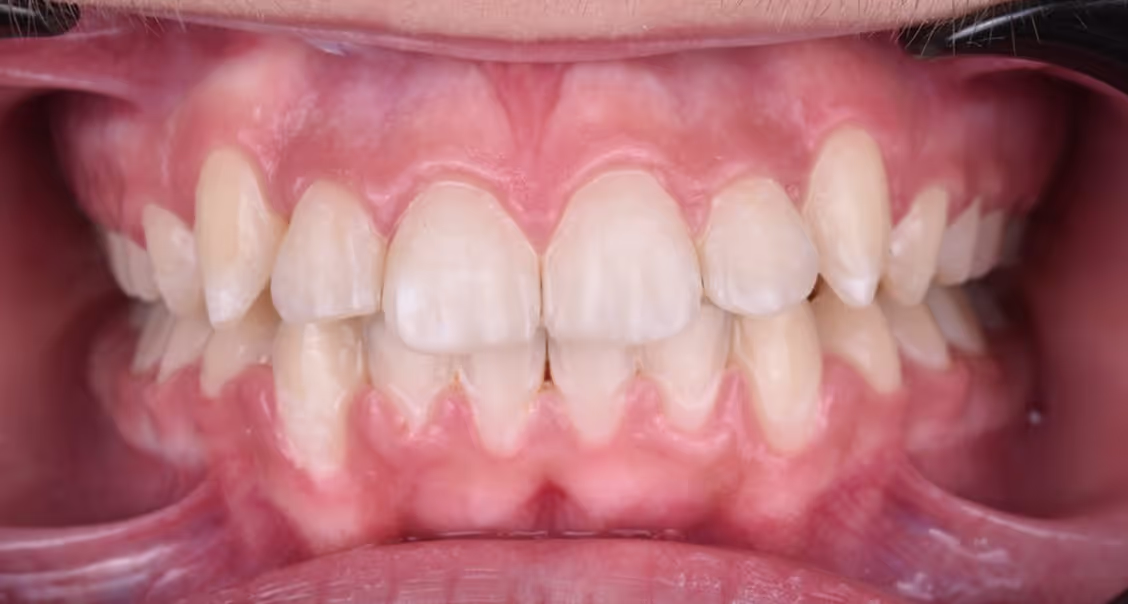
The patient is 13 years old. At the time of the visit, misalignment of teeth and bite formation typical for adolescence were observed.
Orthodontic treatment was chosen using the H4 bracket system — a modern self-ligating system that allows for gentle, controlled, and effective work.
Treatment features:
- no tooth extraction;
- bite and tooth position correction was achieved through the use of elastics and precise orthodontic mechanics.
The treatment progressed in stages, with regular monitoring and load adjustments according to the patient's age.
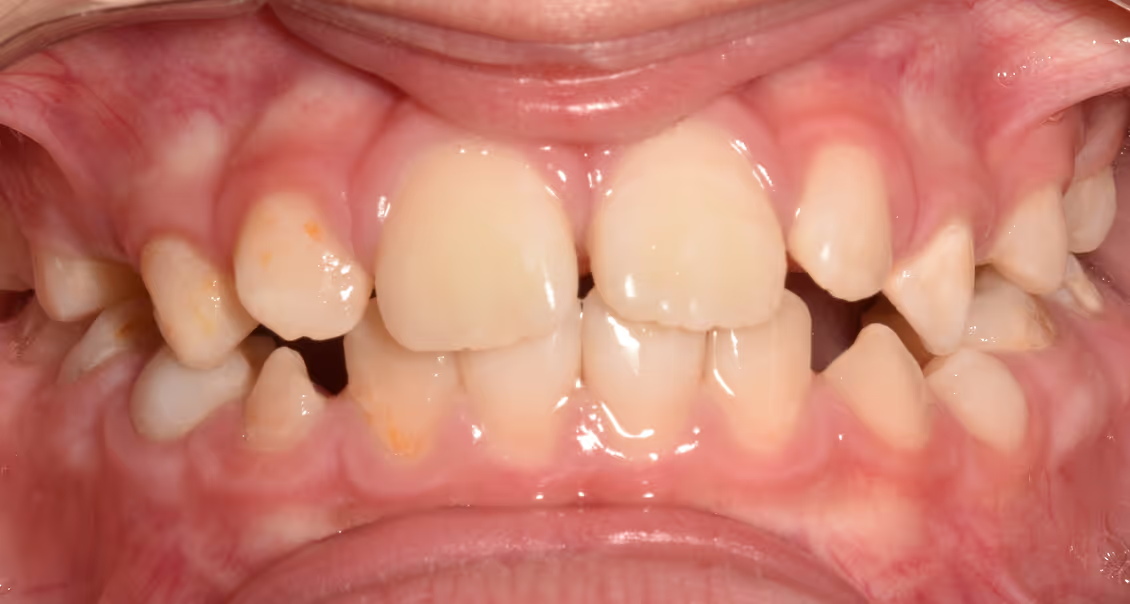
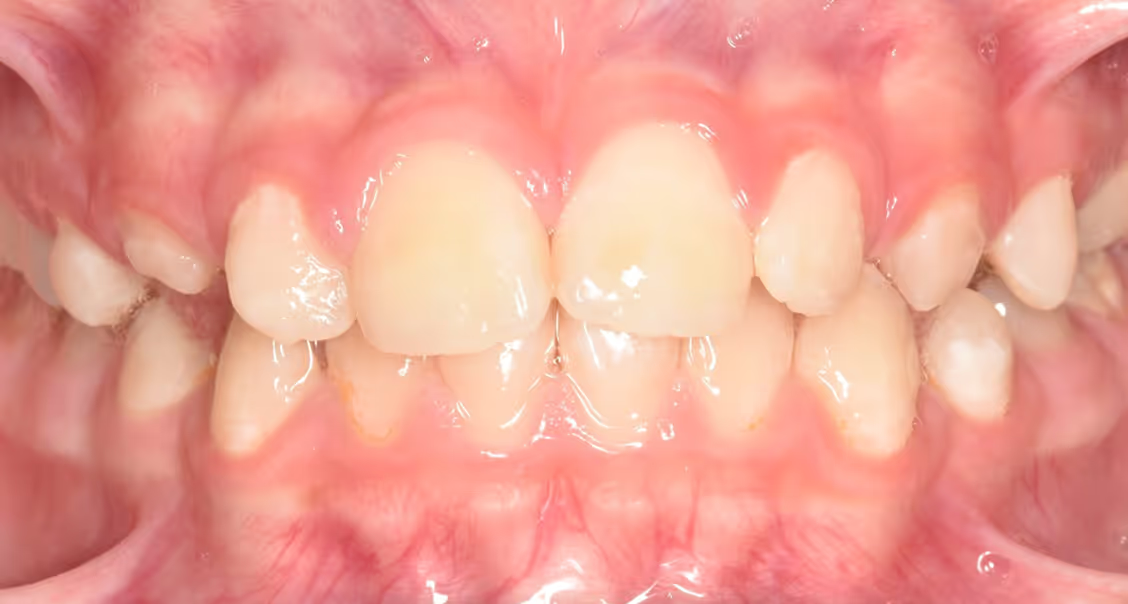
The parents came in due to teeth crowding and narrowing of the dental arches in their child, as well as misalignment of the front teeth and lack of space for the eruption of permanent teeth.
The removable Marco Rosso orthodontic plate was chosen to correct the bite.
Why Marco Rosso:
- individually made to fit the child's jaw anatomy
- gentle, physiological effect on jaw growth and development
- possibility of gradual dental arch expansion
- controlled and predictable result
The plate was used according to the recommended wearing schedule, with regular orthodontic adjustments.
Endodontics Przed/Po
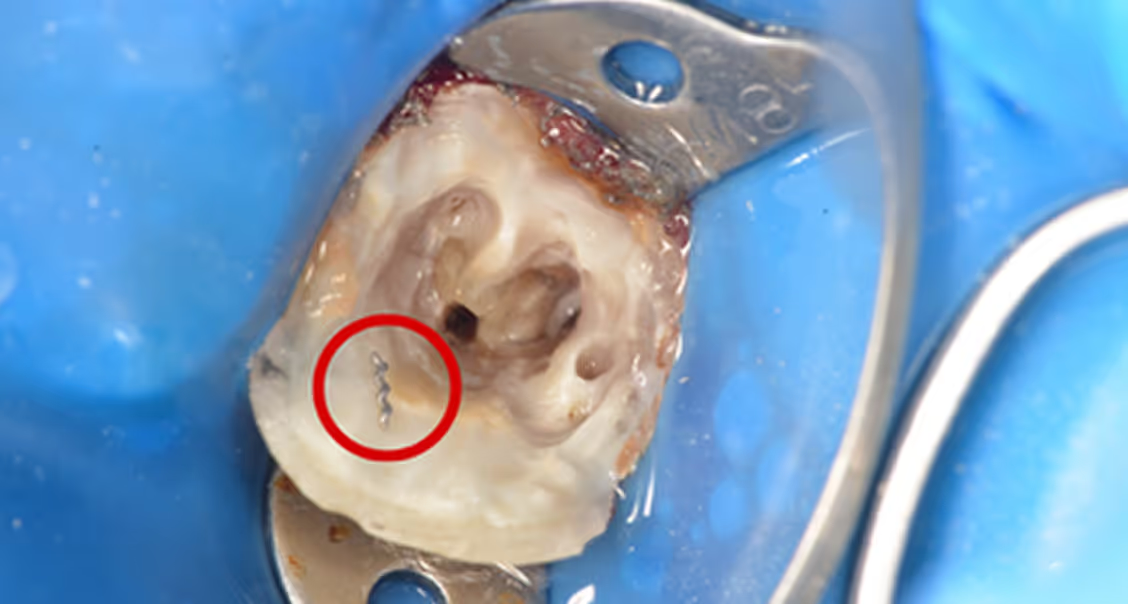
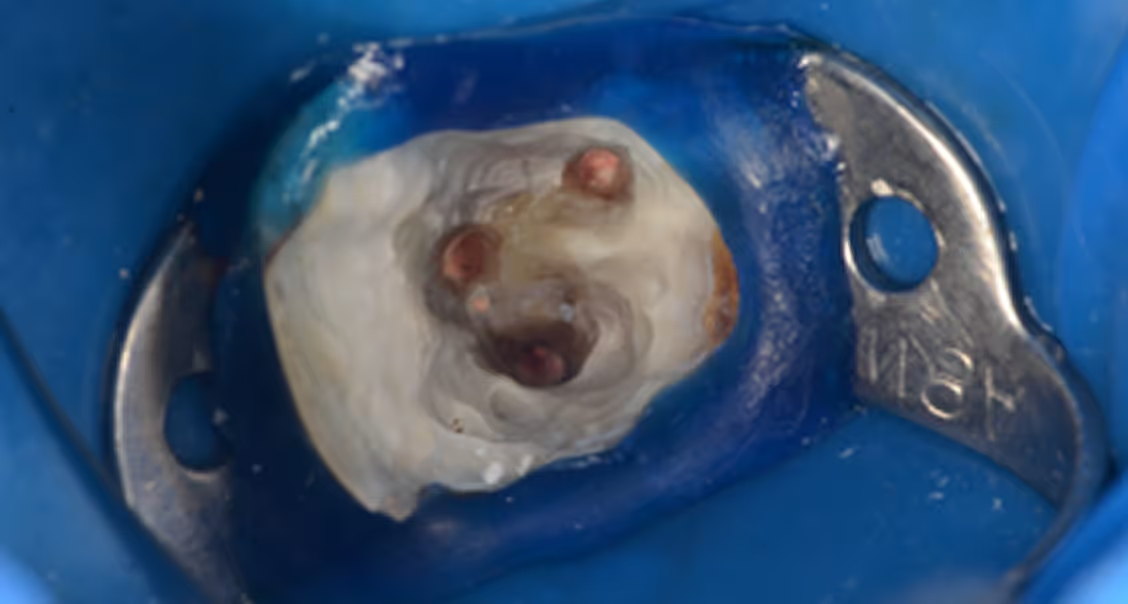
The patient came in with complaints of periodic discomfort in the area of tooth 37. The tooth had previously been endodontically treated, restored with a post-and-core, and covered with a prosthetic restoration.
After a clinical examination and radiological study, the following was revealed:
- poor-quality root canal obturation
- signs of periapical inflammation
- the need for revision of the root canal system
To gain full access to the canals, a decision was made to perform repeat endodontic treatment with removal of the post-and-core.
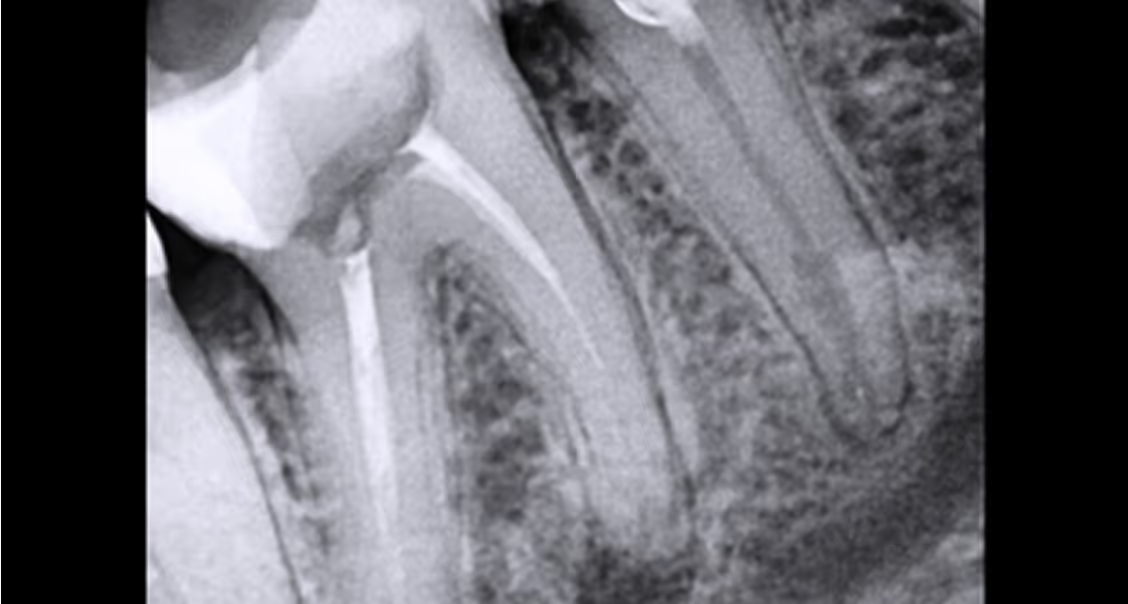
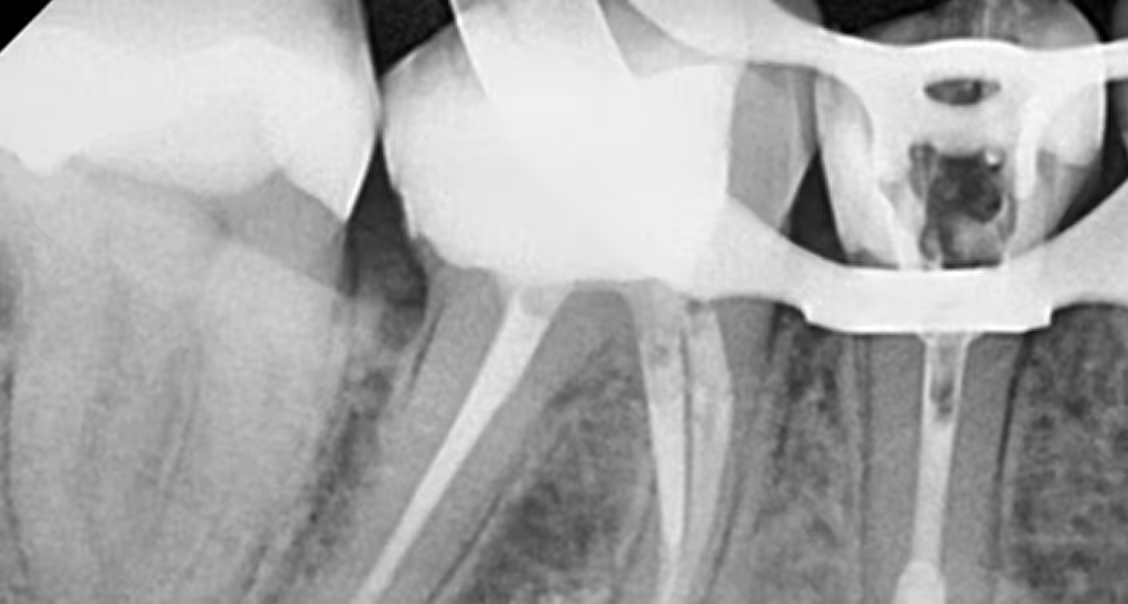
The patient came in with complaints of discomfort and periodic pain in the area of tooth 37. The tooth had previously been endodontically treated and covered with a metal-ceramic crown.
After removing the metal-ceramic crown, it was found that the tooth had been restored with a metal post.
The radiological examination revealed:
- poor-quality root canal obturation
- signs of a periapical inflammatory process
- destruction of bone tissue near the root apices
The clinical picture corresponded to chronic apical periodontitis.
Conservative dentistry Przed/Po
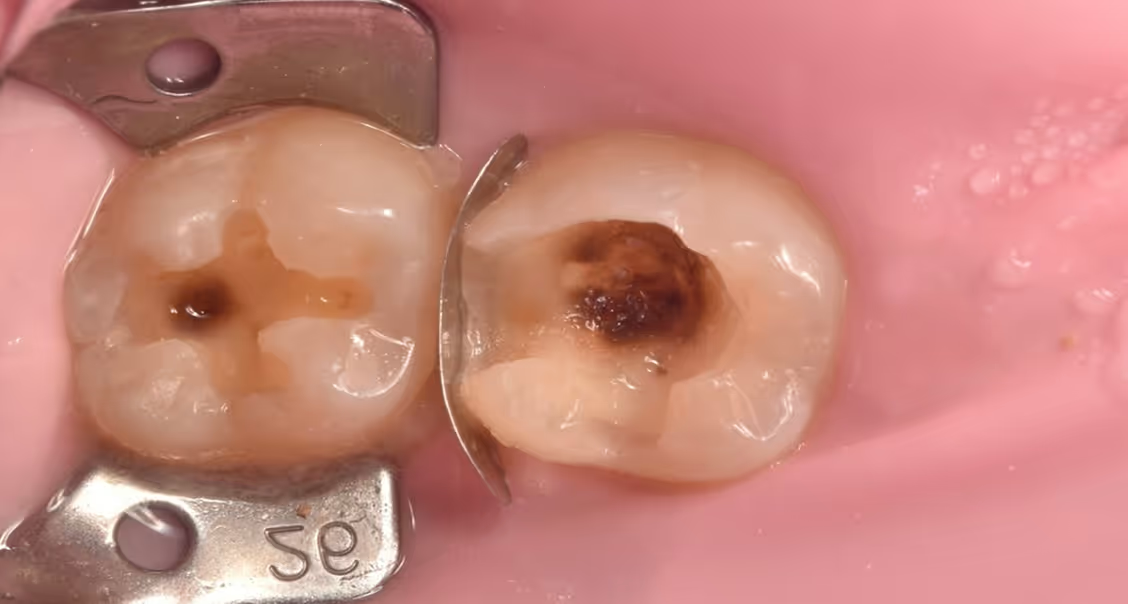
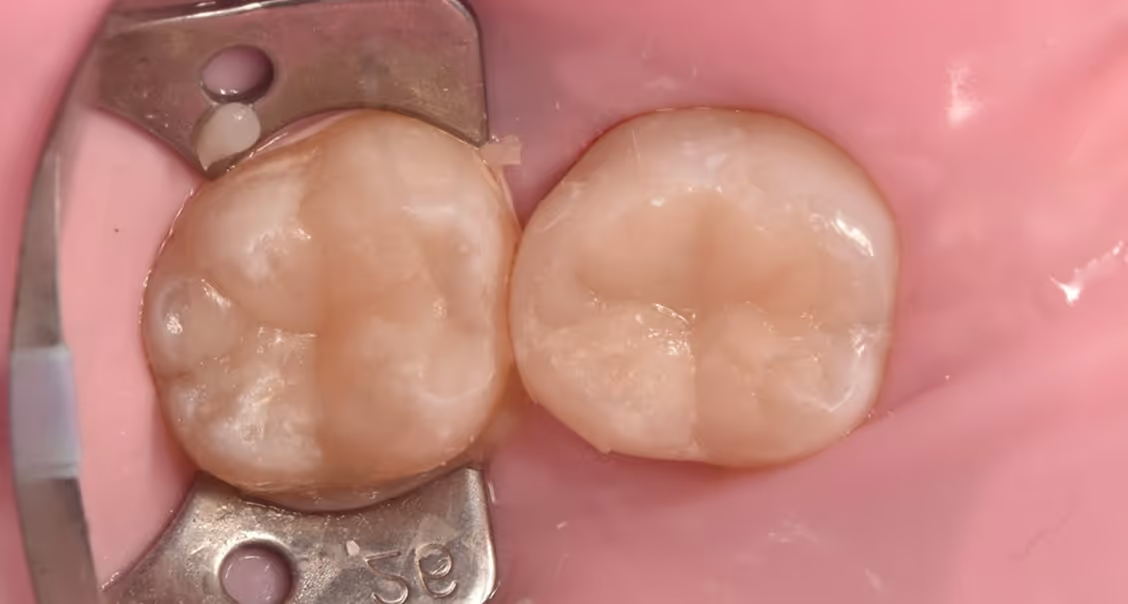
The patient came in with complaints of discomfort while chewing and darkening in the area of the chewing teeth.
During the clinical examination, carious lesions were detected in the fissures of the chewing teeth.
The working field was isolated using a rubber dam, the tissues affected by caries were removed, and the cavity was medically treated.
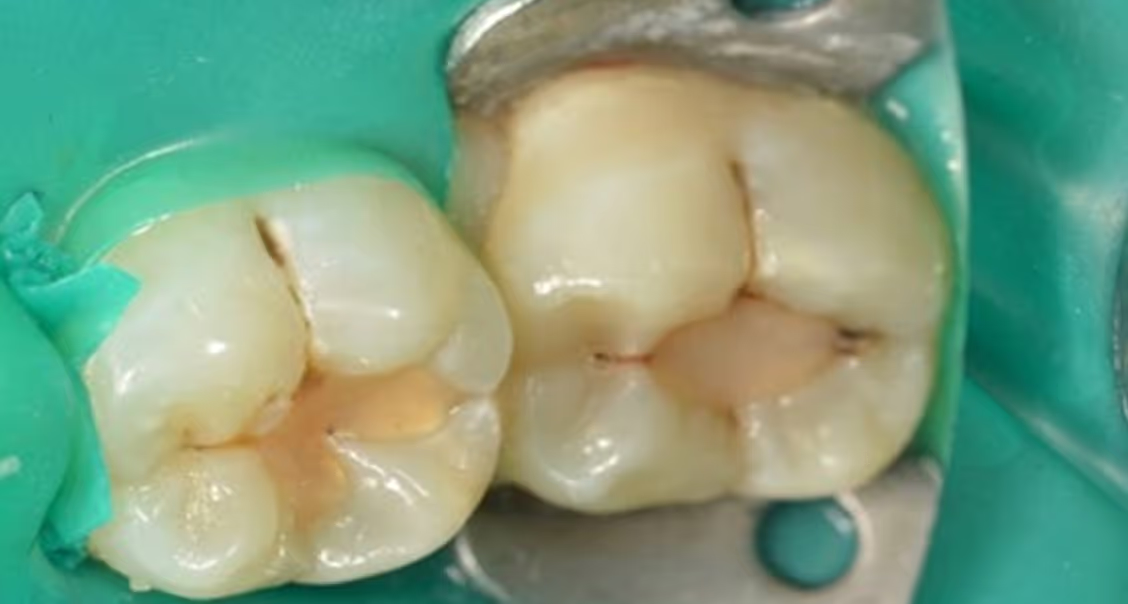
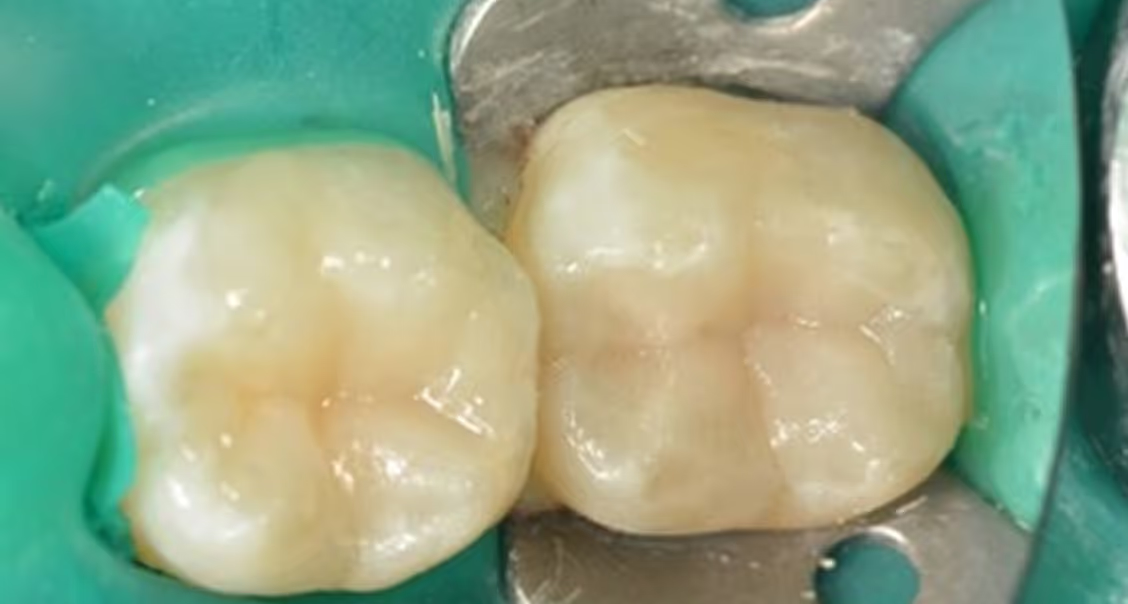
The patient came in with complaints of discomfort while chewing and the unaesthetic appearance of the fillings. The previously placed restorations had been done without recreating the anatomy.
The examination revealed poor-quality fillings with a disrupted relief of the chewing surface and insufficient sealing.
A rubber dam isolation was performed, the old restorations were removed, the tooth tissues were revised, secondary caries was eliminated, and the cavities were prepared for re-restoration.
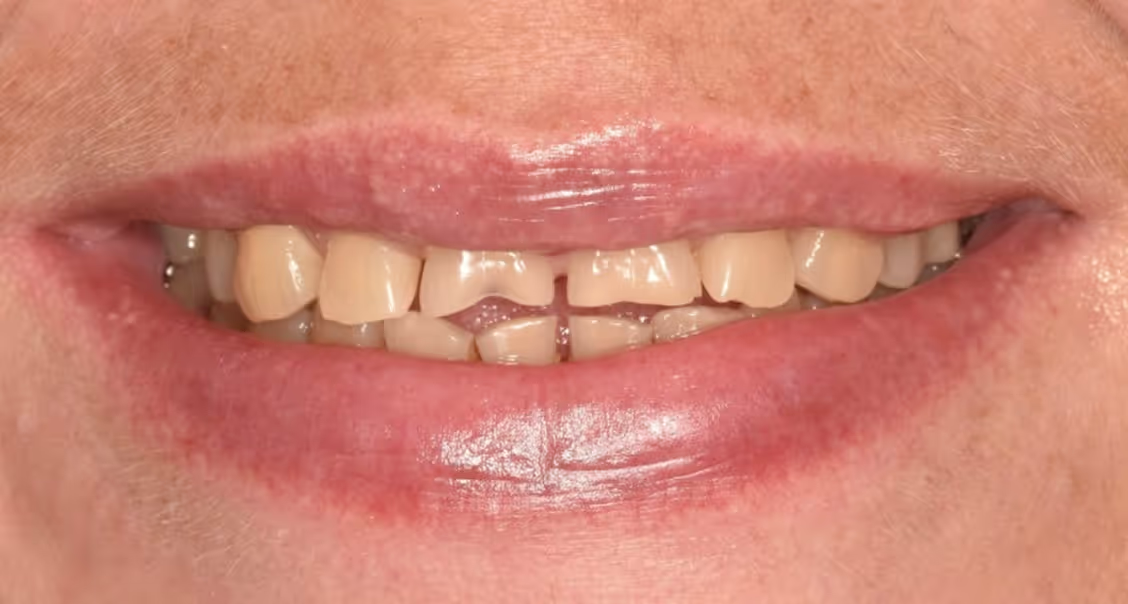
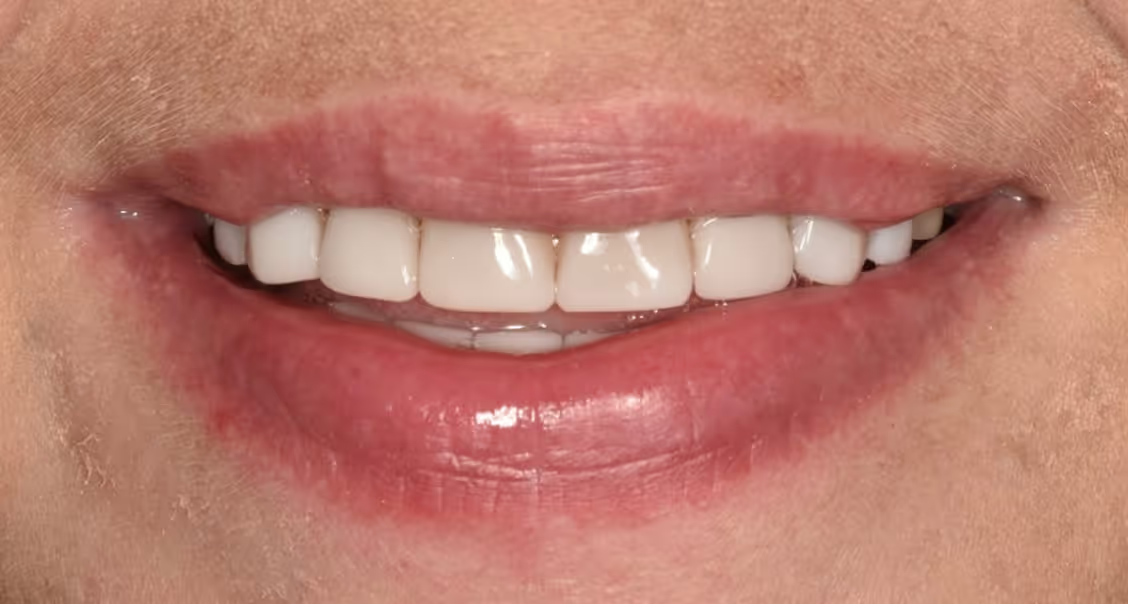
The patient came in with complaints about the unaesthetic appearance of her smile: uneven color, shape of the front teeth, and signs of wear.
The restoration was performed in layers using modern photopolymer materials, which made it possible to accurately reproduce the natural anatomy of the teeth and the optical properties of enamel and dentin. Special attention was paid to the harmony of the smile and the patient's individual facial features.
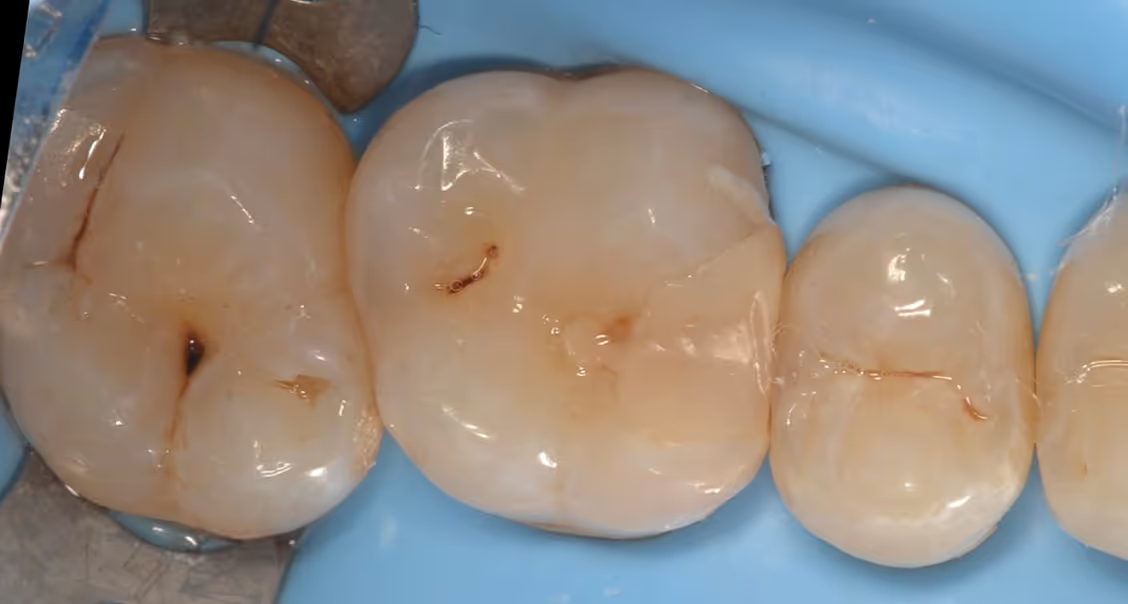
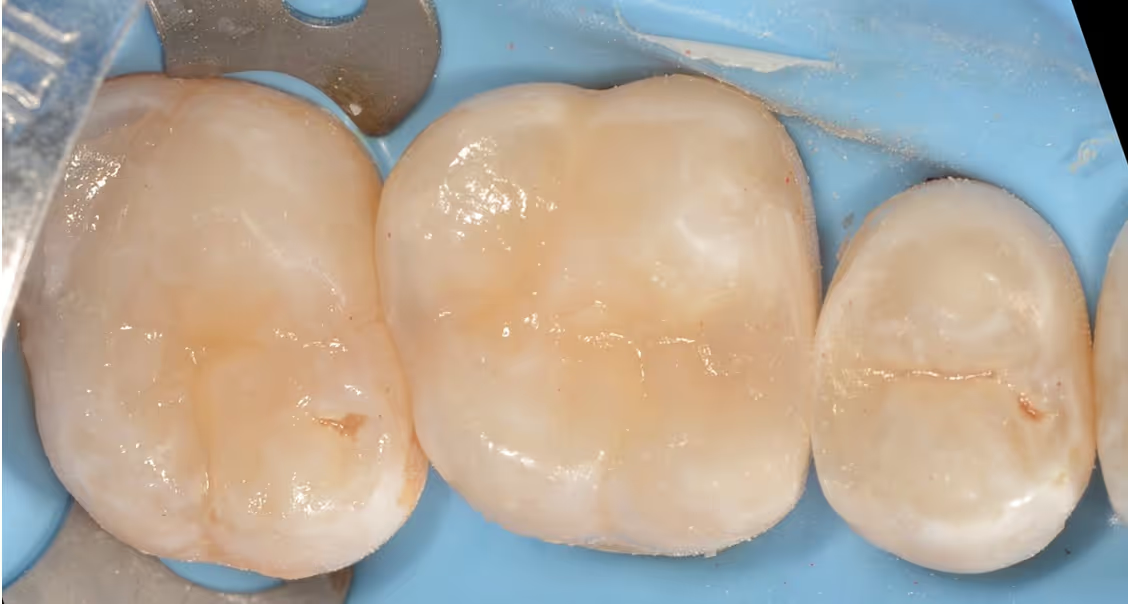
The patient came in for a preventive check-up. The examination revealed multiple pigmented fissures and initial carious lesions in several chewing teeth.
Multiple fissure caries of the molars and premolars was clinically diagnosed.
The working field was isolated with a rubber dam to ensure full dryness and infection control. Gentle removal of the affected tissues was performed with maximum preservation of healthy tooth structure, and the cavities were medically treated.
Periodontology Przed/Po
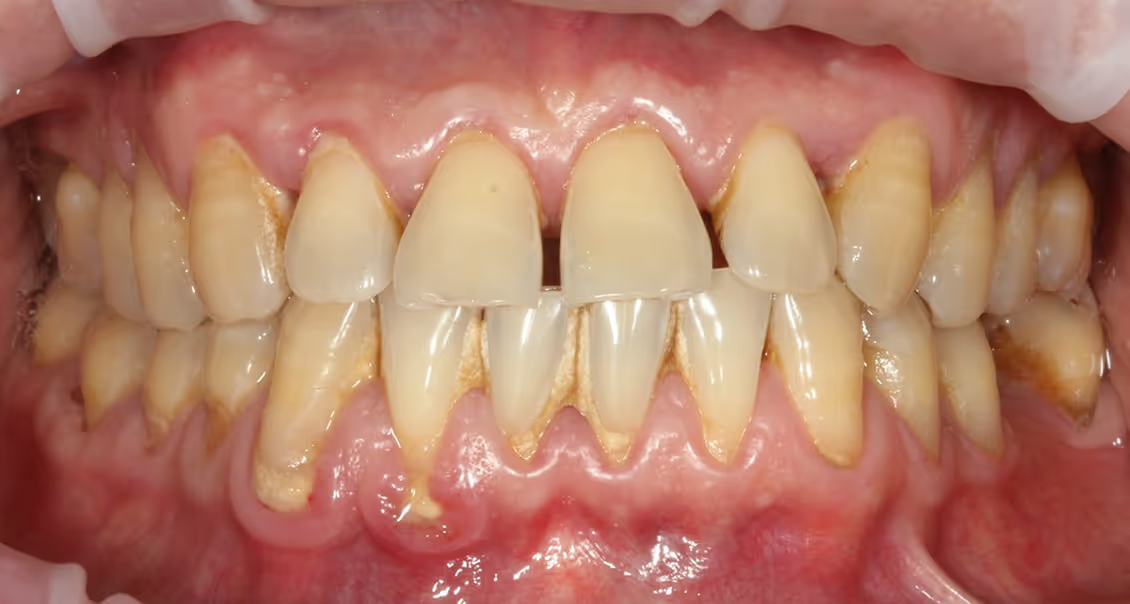
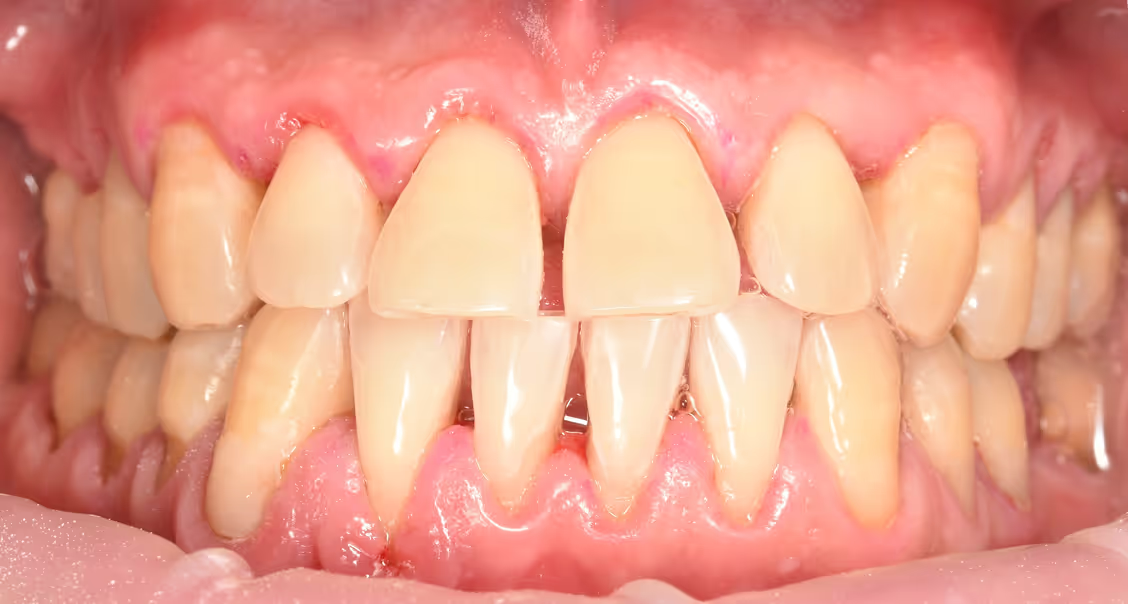
The patient came in with complaints of bleeding gums, unpleasant mouth odor, and discomfort while eating and brushing teeth.
Clinical examination revealed:
- a significant amount of soft and hard pigmented dental deposits on the teeth of both jaws
- swollen gums with pronounced bleeding on touch
- purulent discharge from periodontal pockets
- signs of an active inflammatory process in the periodontal tissues
- missing tooth 36 (secondary edentulism)
The condition of the periodontal tissues indicates a long-standing course of the disease and requires staged comprehensive treatment.
Hygiene and prevention Przed/Po
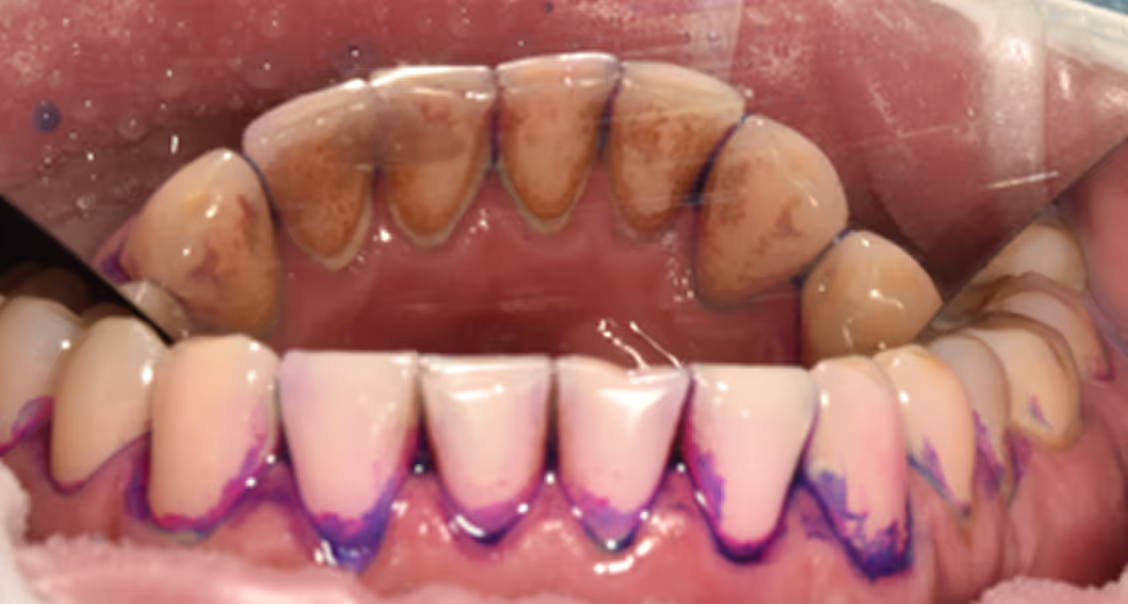
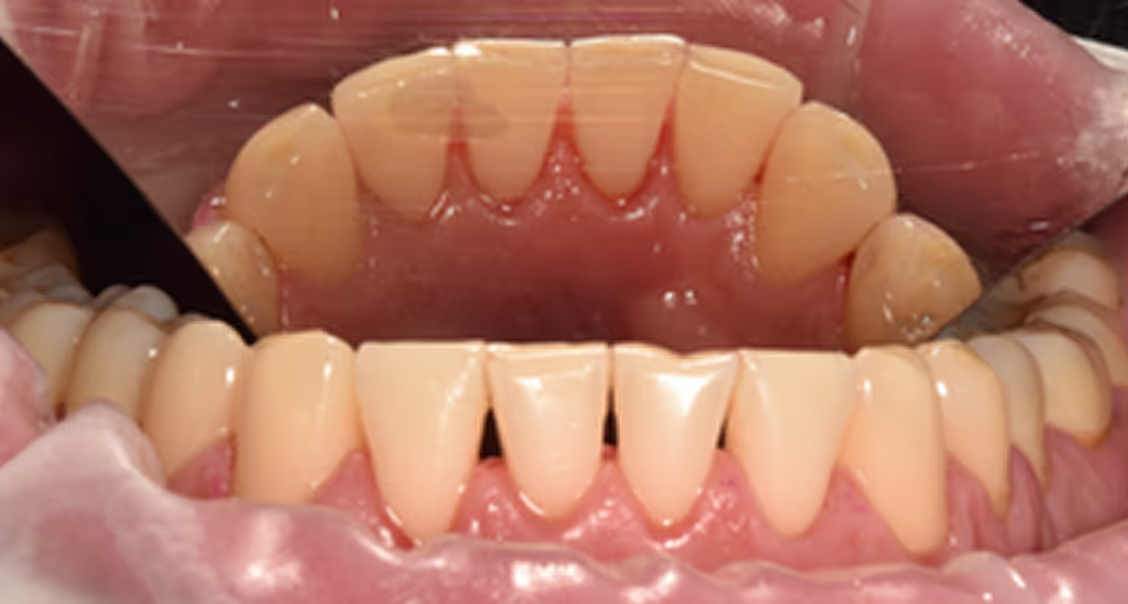
The patient came in for a preventive check-up. During the clinical examination, a significant amount of soft dental plaque and pigmented deposits were found on the tooth surfaces, especially in the area of the lower front teeth.
A plaque indicator was used to visualize dental plaque, which made it possible to clearly identify the areas where bacterial deposits accumulate.
Comprehensive professional hygiene was performed, which included:
- removal of soft dental plaque
- cleaning of pigmented deposits
- polishing of tooth surfaces
- recommendations for individual oral hygiene
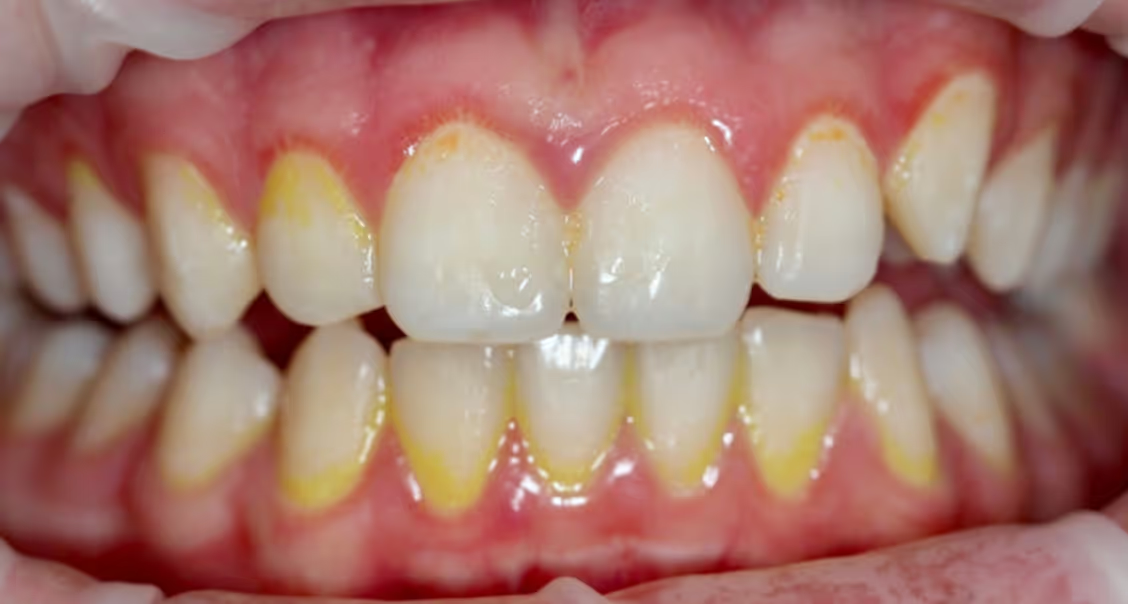
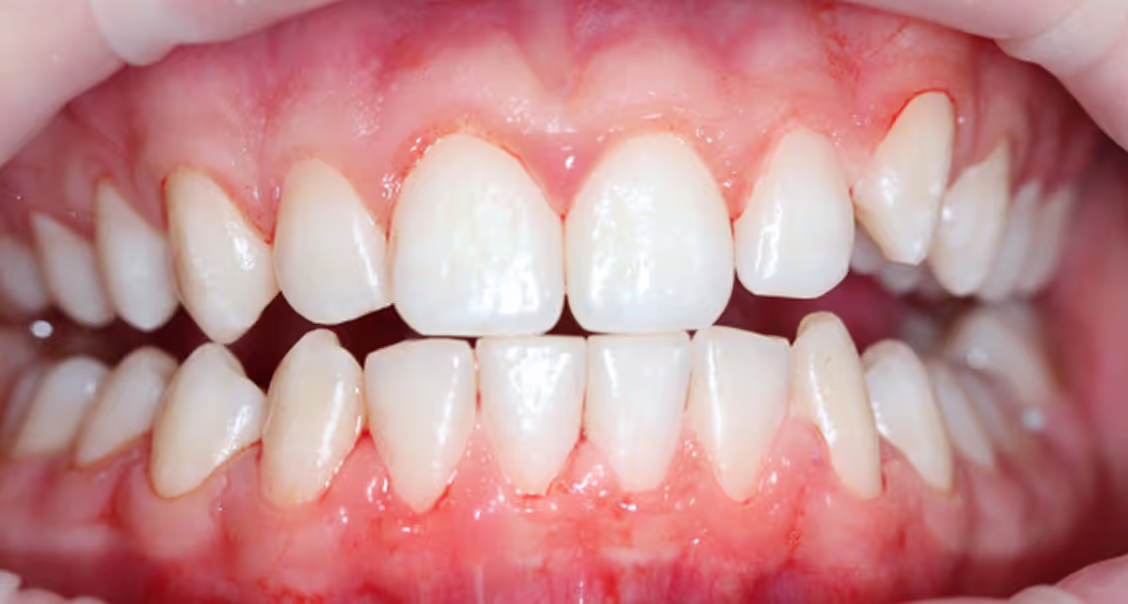
The teenager came in for a preventive check-up.
The parents noticed yellowish plaque near the gum line and slight gum bleeding while brushing.
The examination revealed:
- accumulation of soft plaque in the gumline zone
- pigmented deposits
- initial signs of gingivitis (gum redness)
In adolescence, due to hormonal changes, the gums react more actively, and plaque accumulates faster — even with regular home brushing.
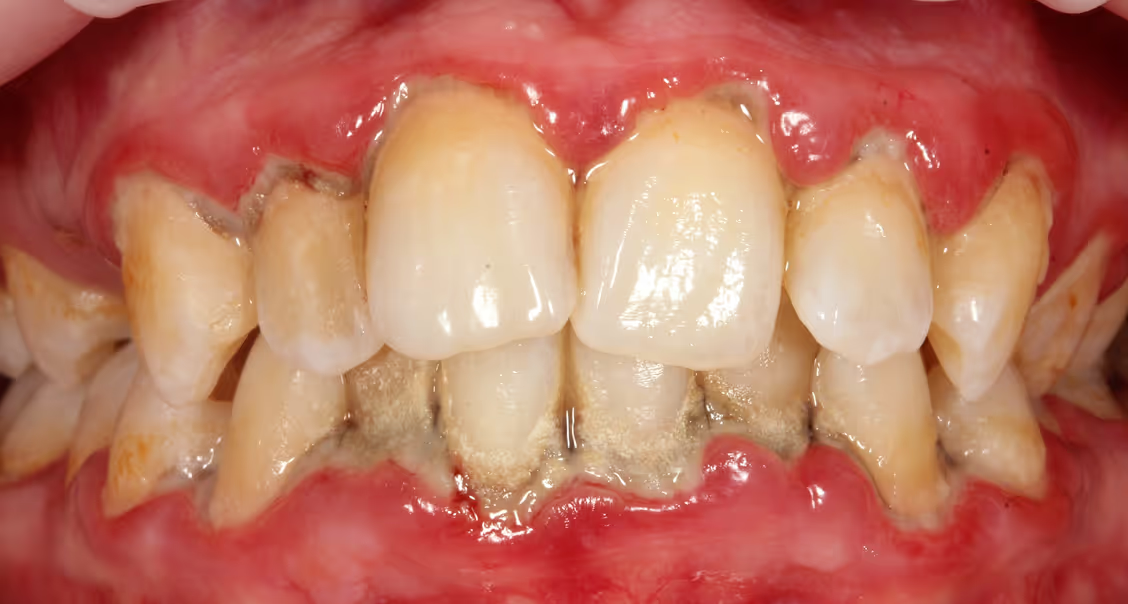
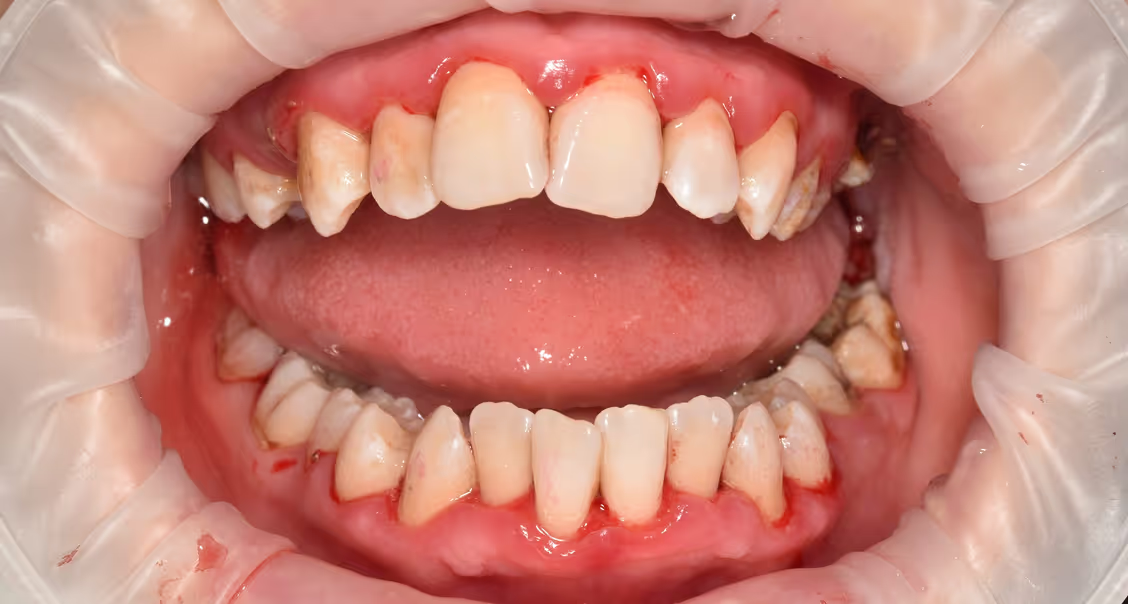
The patient came in with complaints of bleeding gums while brushing, gum swelling and redness, and bad breath.
The clinical examination revealed significant dental deposits (supra- and subgingival) and gum inflammation.
Periodontal probing was performed:
- periodontal pockets were detected;
- bleeding on probing;
- signs of attachment loss.
Prosthodontics Przed/Po
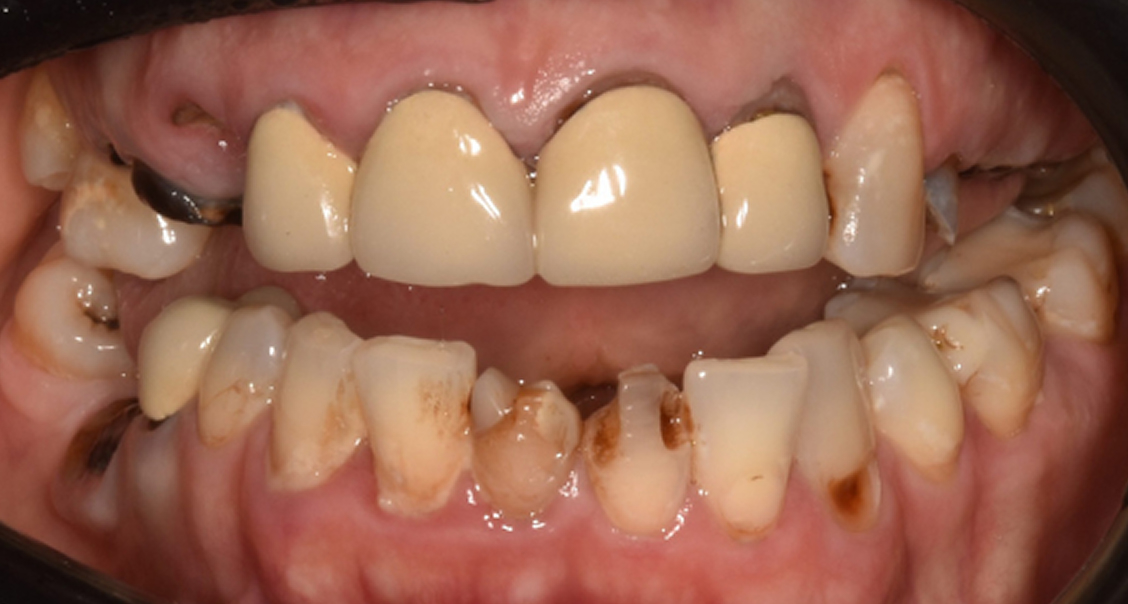
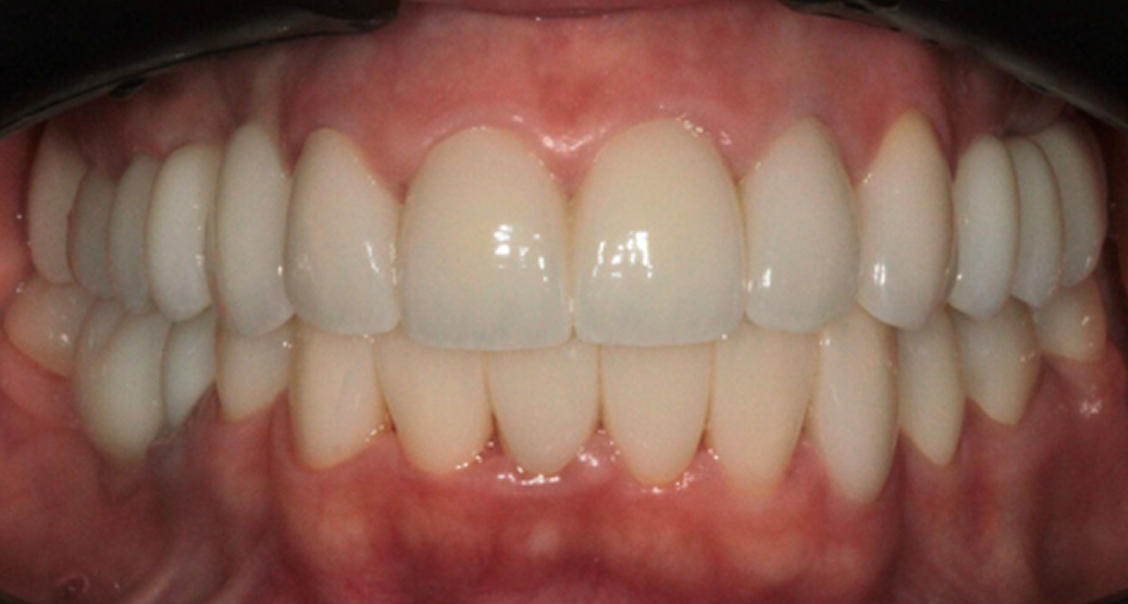
The patient came in with significant tooth destruction, multiple carious lesions, and impaired chewing function. Most of the teeth could not be predictably restored due to the extensive degree of destruction and loss of functional contacts.
After a clinical examination, photo documentation, and a radiological study, an individual treatment plan was developed.
A decision was made to carry out rehabilitation using the All-on-4 concept.
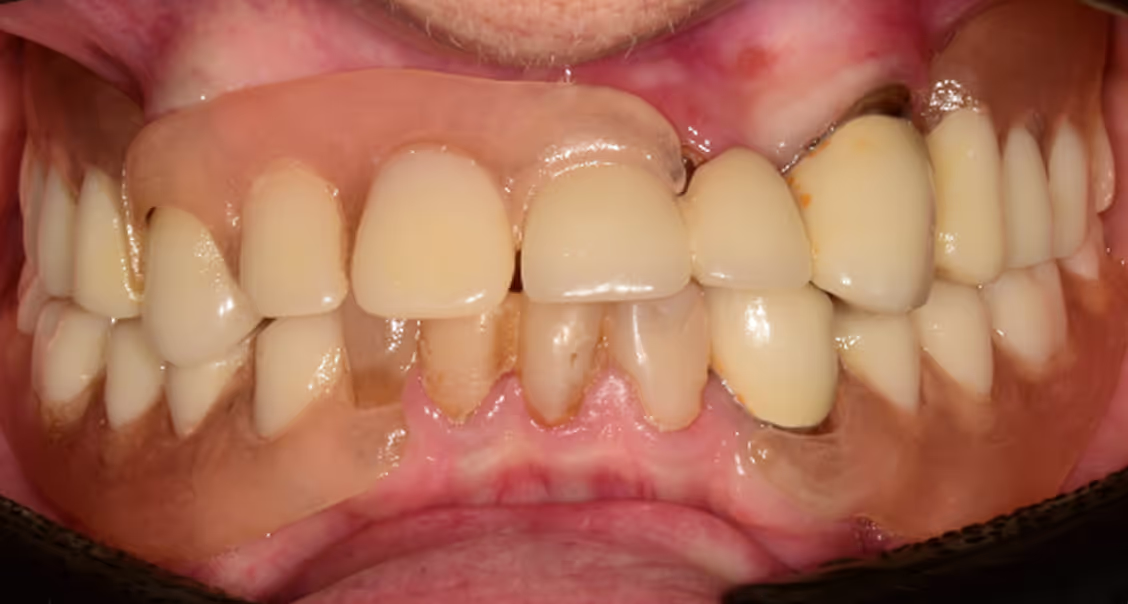
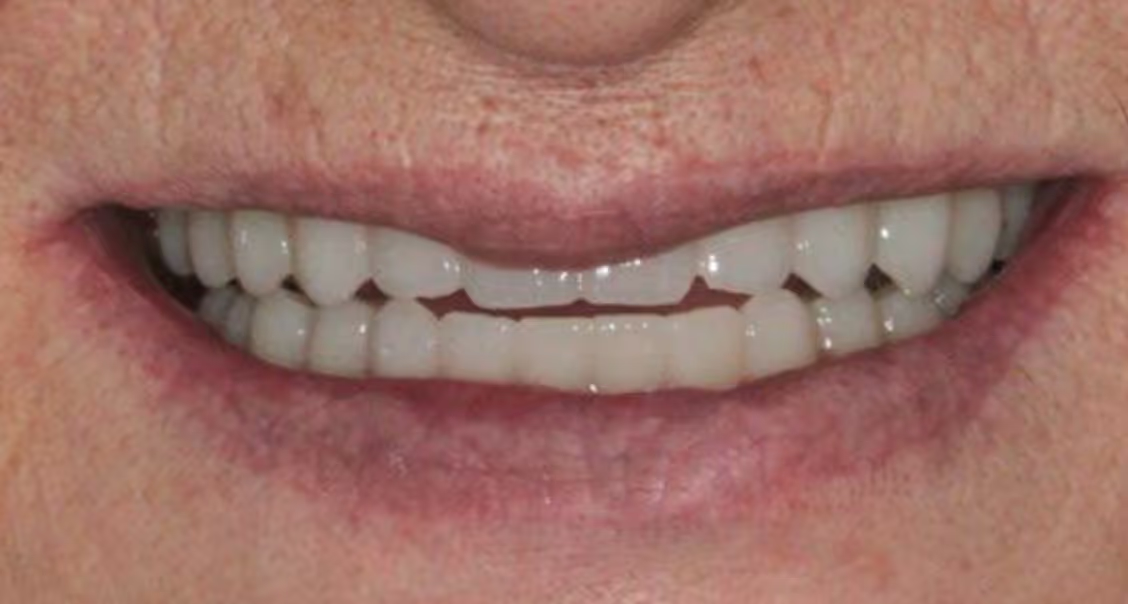
For a long time, the patient used removable complete dentures that caused discomfort in daily life: the dentures shifted while speaking and eating.
During the clinical examination, the following was revealed:
- significant tooth loss
- impaired chewing function
- aesthetic changes in the front area
- the need for full dental arch rehabilitation
Given the clinical situation, implant-based rehabilitation with a fixed prosthetic restoration was recommended.
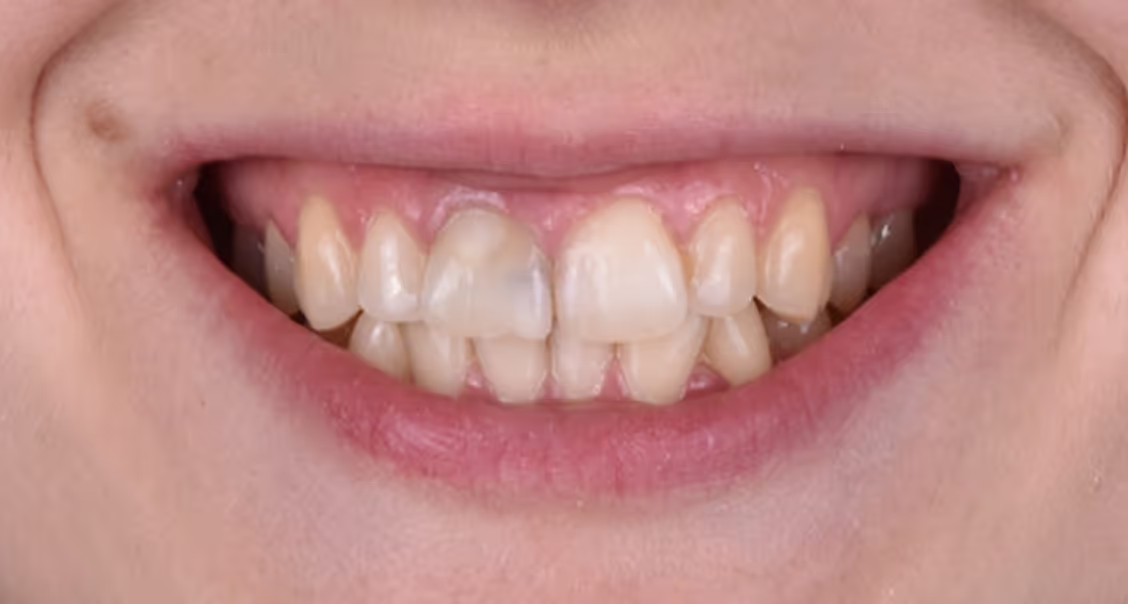
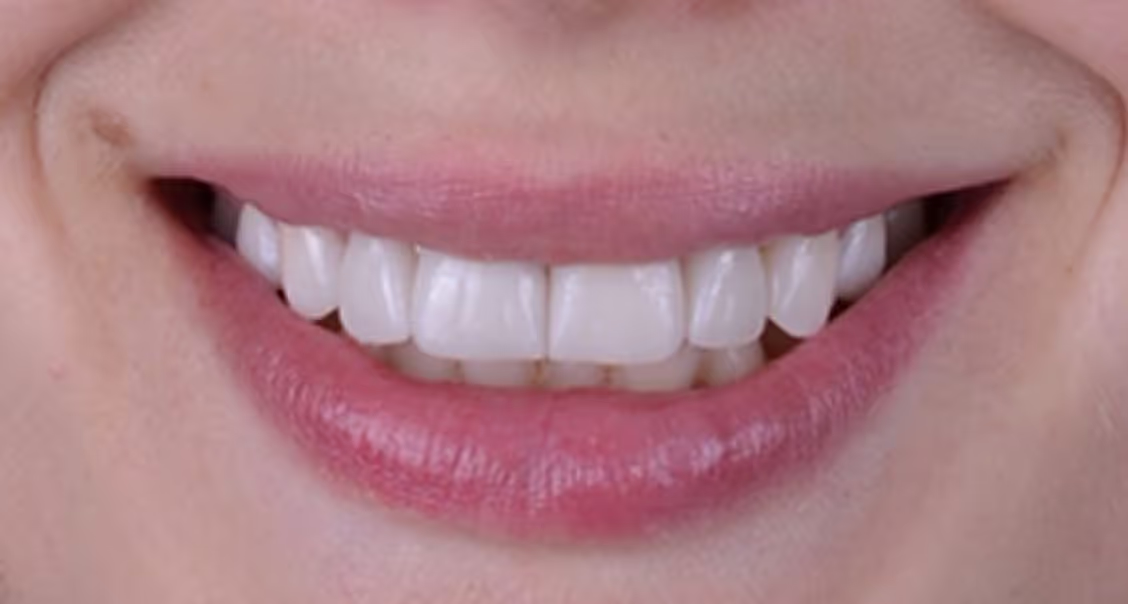
The patient came in with complaints about the unaesthetic appearance of the upper front teeth: irregular tooth shape, discoloration, and insufficient smile harmony.
After a clinical examination and photo documentation, an individual aesthetic rehabilitation plan was developed.
Before placing the veneers, comprehensive oral preparation was carried out:
- caries treatment,
- professional hygiene,
- whitening with the Beyond system
- extraction of four wisdom teeth.
Paediatric dentistry Przed/Po
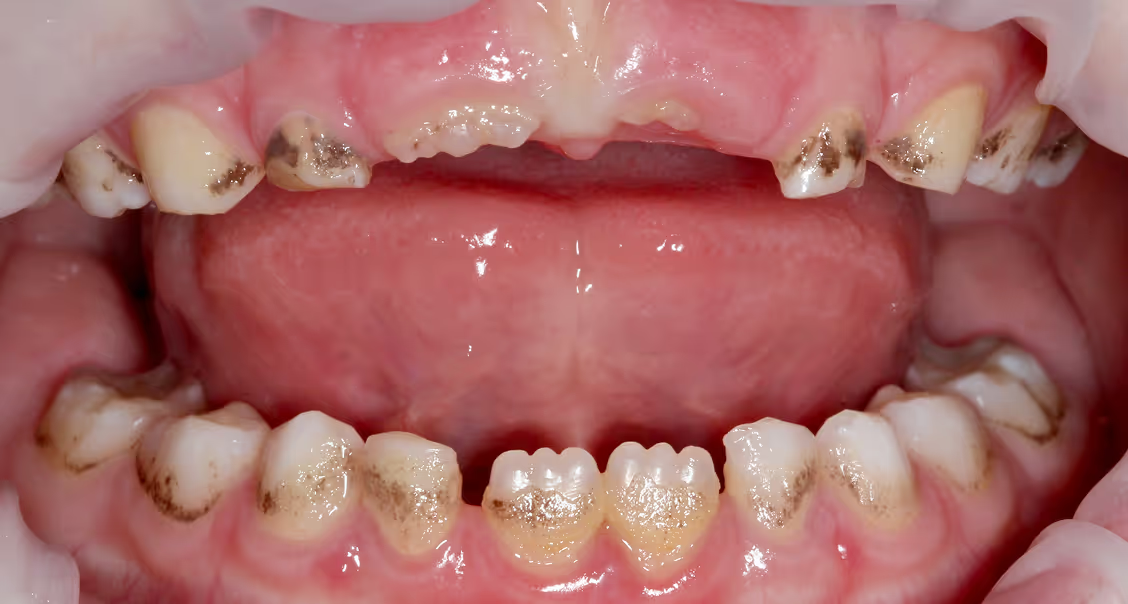
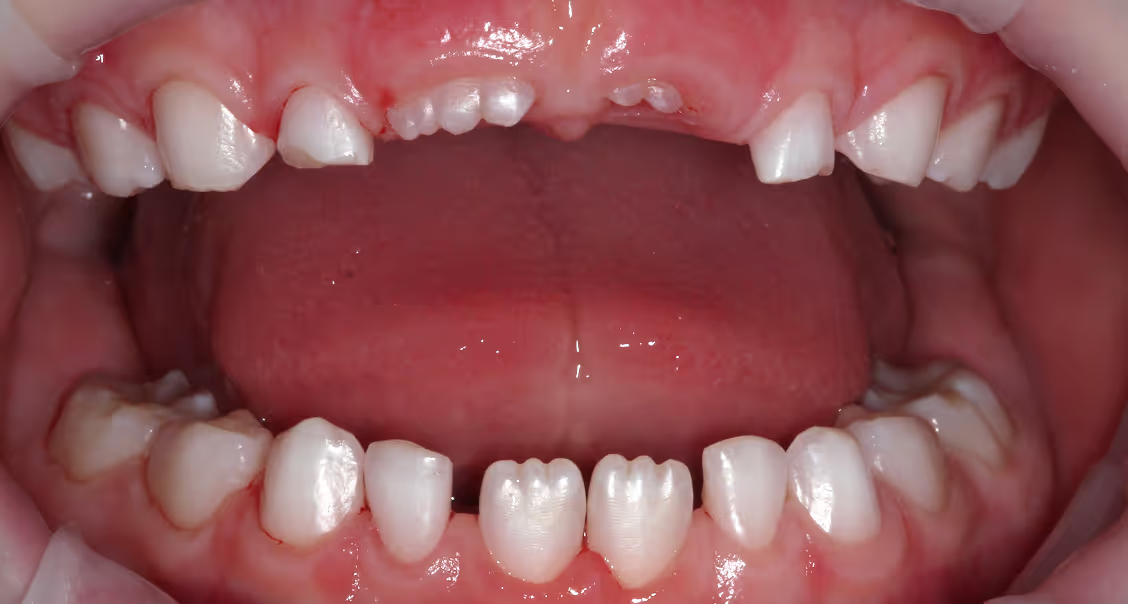
The parents came in requesting removal of dark, pigmented plaque on their child's teeth.
Aesthetic discomfort, uneven tooth color, accumulation of dark deposits near the gum line.
The examination revealed:
- massive pigmented plaque on the front and lateral groups of teeth
- deposits located mainly in the gumline zone
- signs of insufficient hygiene
Important: this is not caries, but without control it can create favorable conditions for its development.
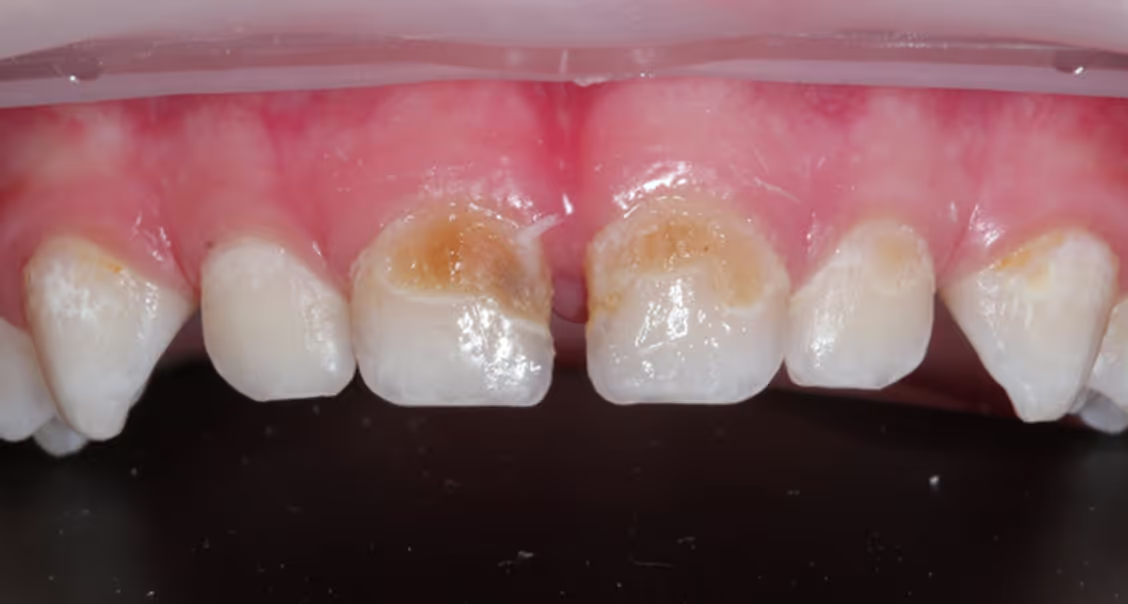
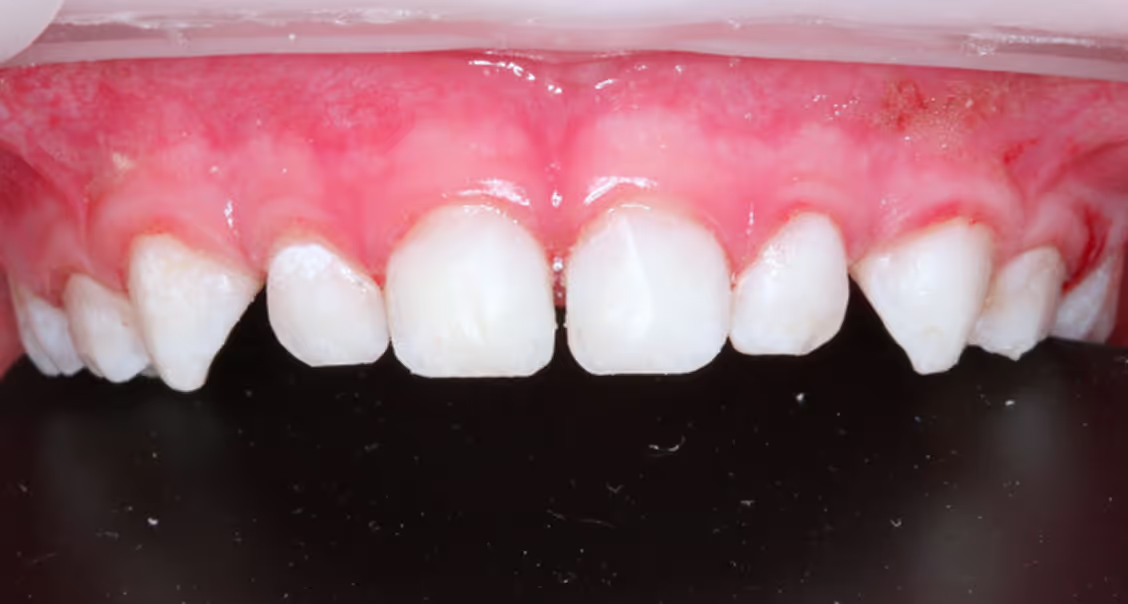
The parents came in due to pronounced carious lesions of the front teeth in their child.
There was a change in enamel color, tissue destruction, increased sensitivity, and discomfort while eating.
The examination revealed:
- deep carious lesions in the front group of teeth
- significant demineralization of the enamel
- destruction of the crown portion
- high risk of rapid process progression
The situation required immediate comprehensive intervention.
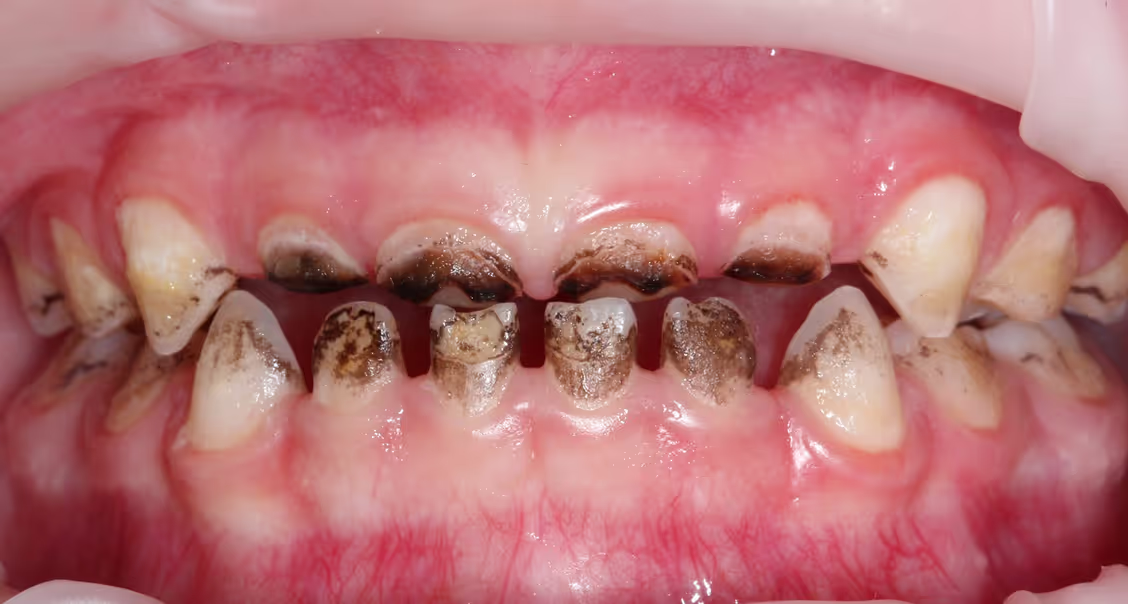
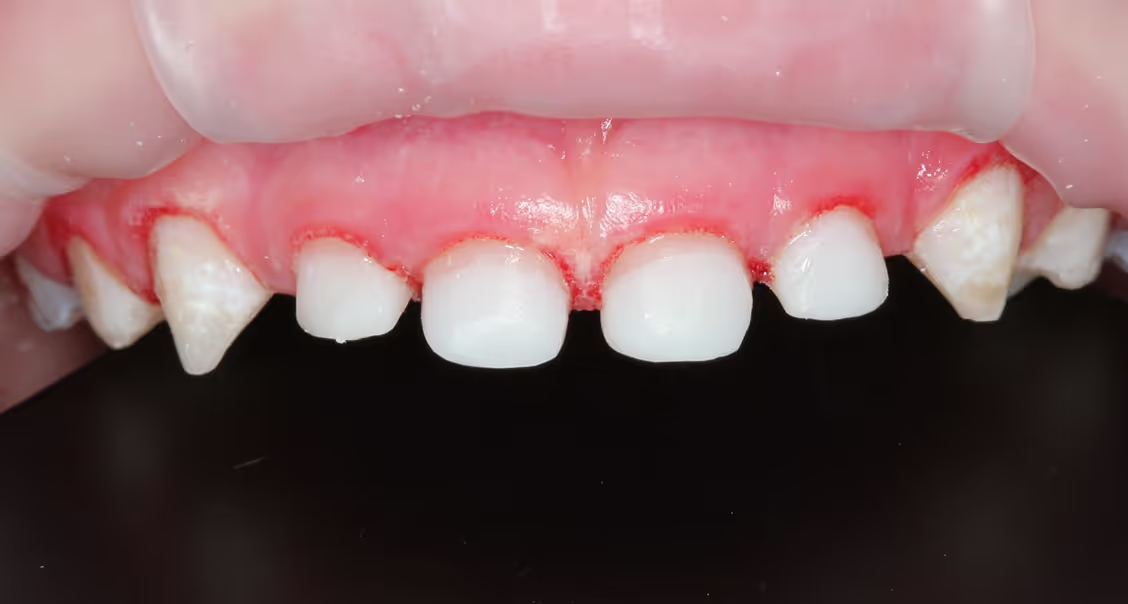
The parents came in requesting comprehensive treatment for their child.
Complaints — multiple tooth lesions, aesthetic discomfort, inability to chew food properly.
The clinical examination revealed:
- multiple caries in the front group of teeth
- significant destruction of the crown portion of individual teeth
- demineralization and pigmentation of the enamel
- risk of further rapid progression of the lesions
The situation required complete oral rehabilitation in a single visit.
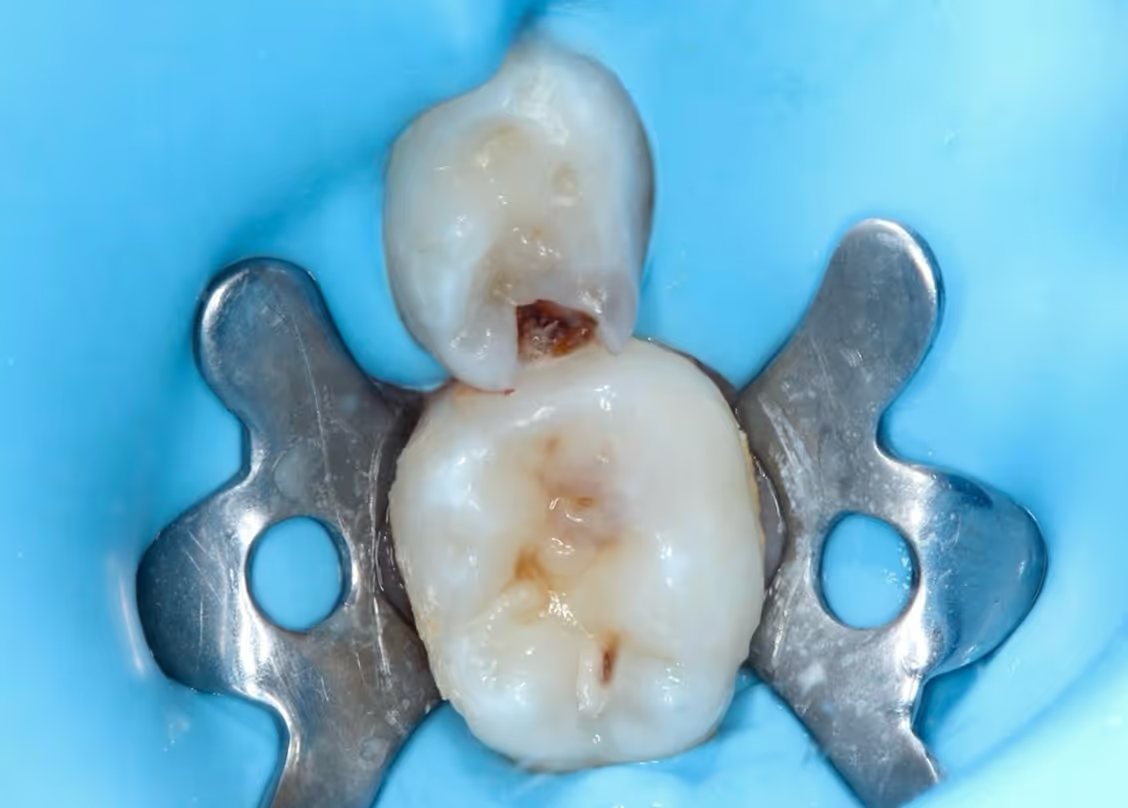
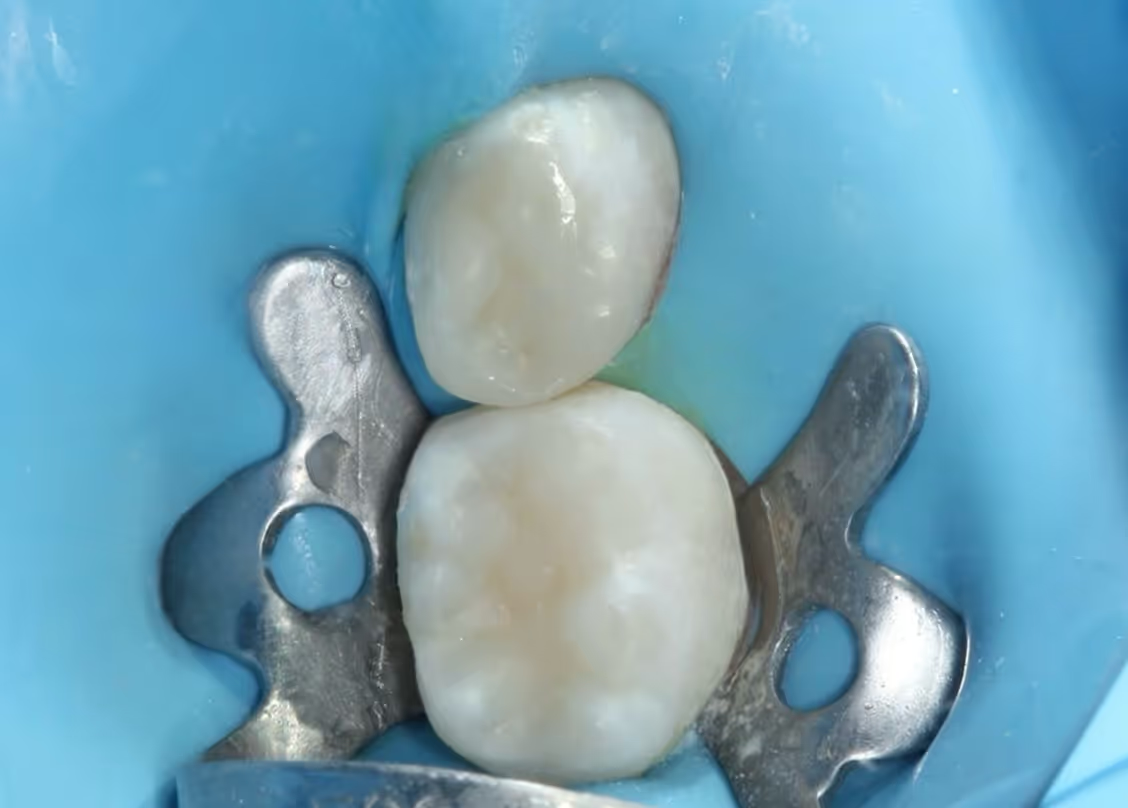
Alice's mother came to the clinic with complaints of tooth pain in her child, which intensified during meals and at night.
After examination and X-ray diagnostics, a deep carious cavity was found that had already connected with the pulp (nerve).
Treatment
Treatment was performed using computer-controlled anesthesia and mandatory rubber dam isolation. During the opening of the cavity, purulent exudate was found, after which root canal treatment was performed according to modern protocols.
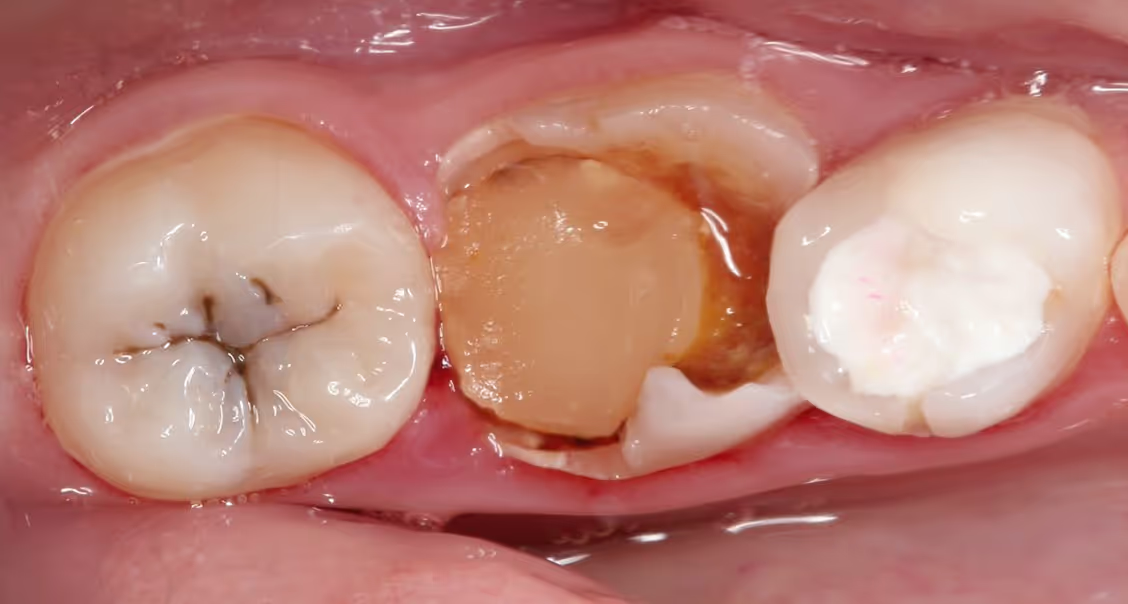
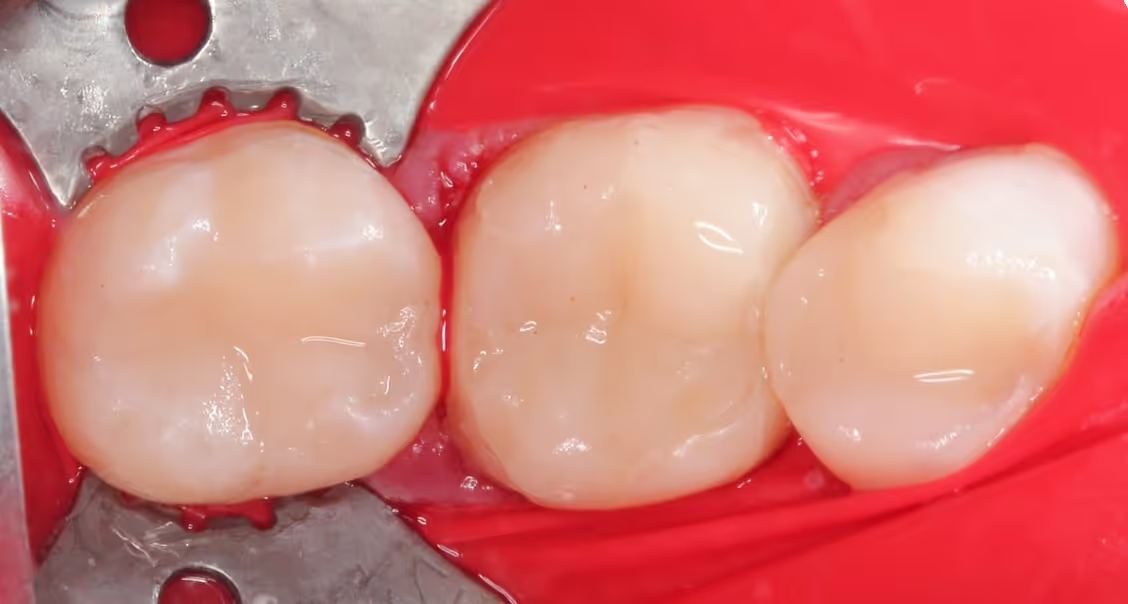
The patient's parents came in with a complaint about a chip in the filling of permanent tooth #6.
The tooth had previously been treated with root canal work, but the old restoration had been placed at the gum line, which over time led to it chipping and losing its seal.
The examination revealed:
- Tooth #6 — disrupted marginal fit of the old filling.
- Tooth #5 — deep carious cavity with pulp damage.
- Tooth #7 — moderate caries.
Important: in teenagers, caries progresses faster than in adults. Even minor pigmentation or a "spot" can turn into a deep lesion in a short time.
Implantology Przed/Po
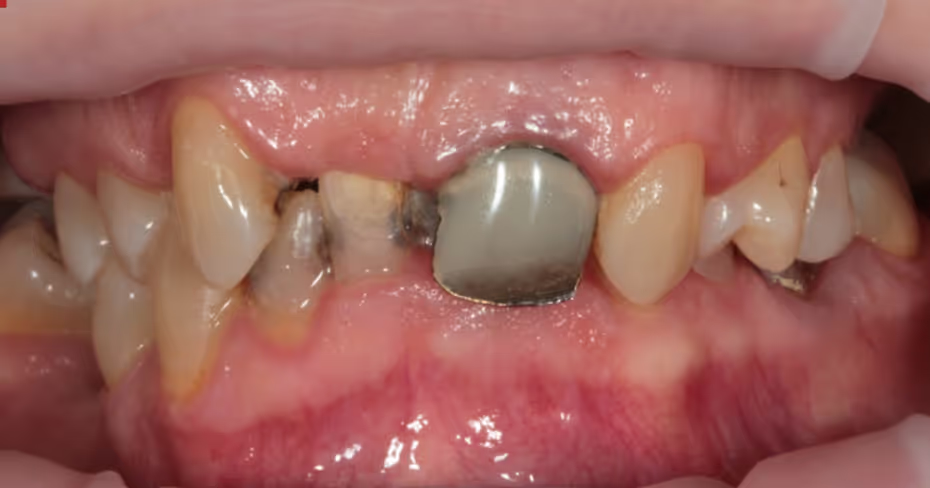
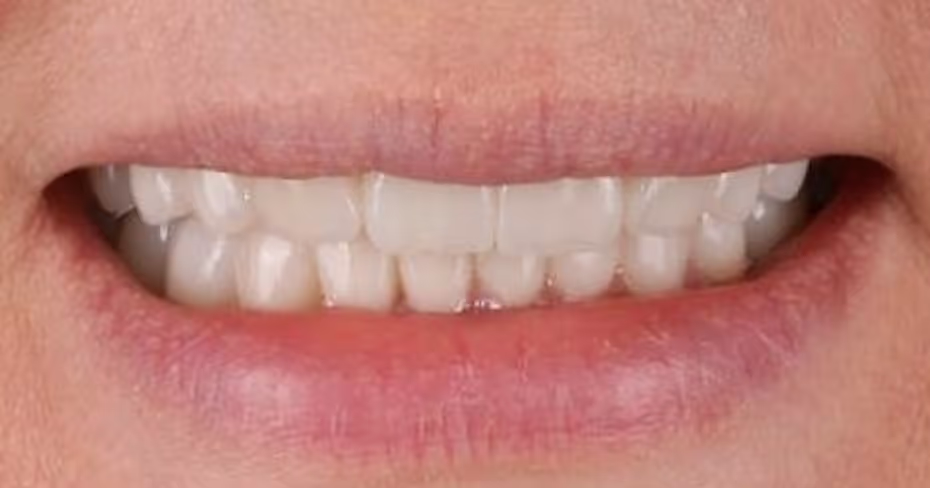
The patient came in with complaints about the aesthetic imperfections of the smile and missing teeth.
After comprehensive diagnostics, an individual plan for total smile rehabilitation was developed.
The treatment included:
- full therapeutic sanitation of the oral cavity
- surgical stage of treatment under sedation
- placement of dental implants
- implant prosthetics with zirconia crowns
- creation of highly esthetic ceramic restorations in the anterior area
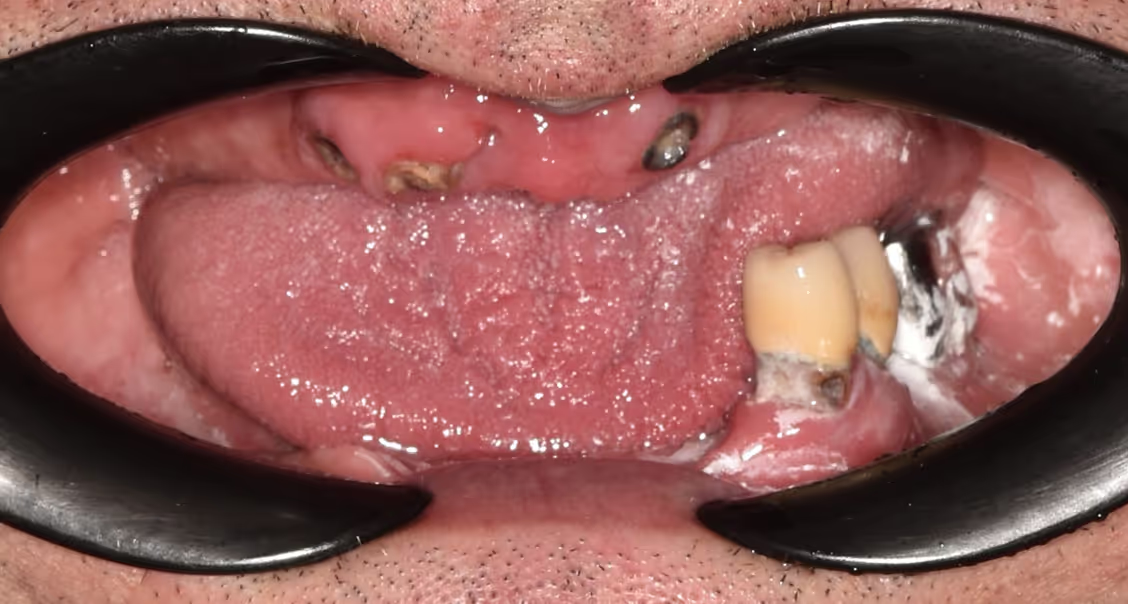
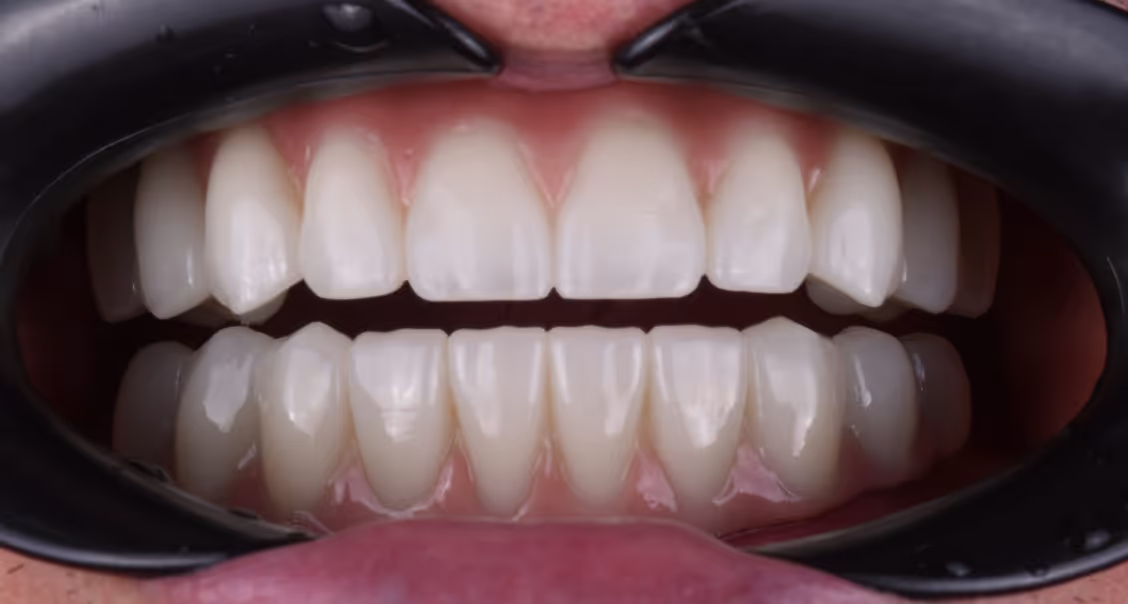
The patient came in with complaints of a pronounced aesthetic and functional defect. For 10 years he had used partial removable dentures on the upper and lower jaws, which over time stopped providing comfort and full chewing function.
After a clinical examination and radiological study, the following was revealed:
- significant bone tissue loss
- critical destruction of the remaining teeth
- impossibility of predictably preserving the abutment teeth
The situation required complete rehabilitation of both jaws.
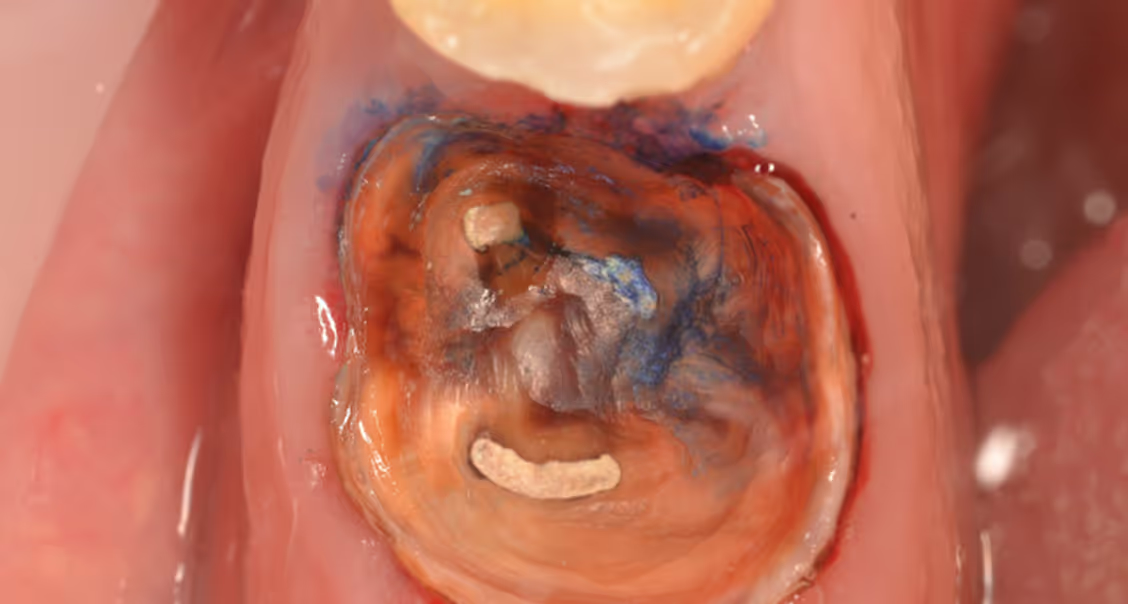
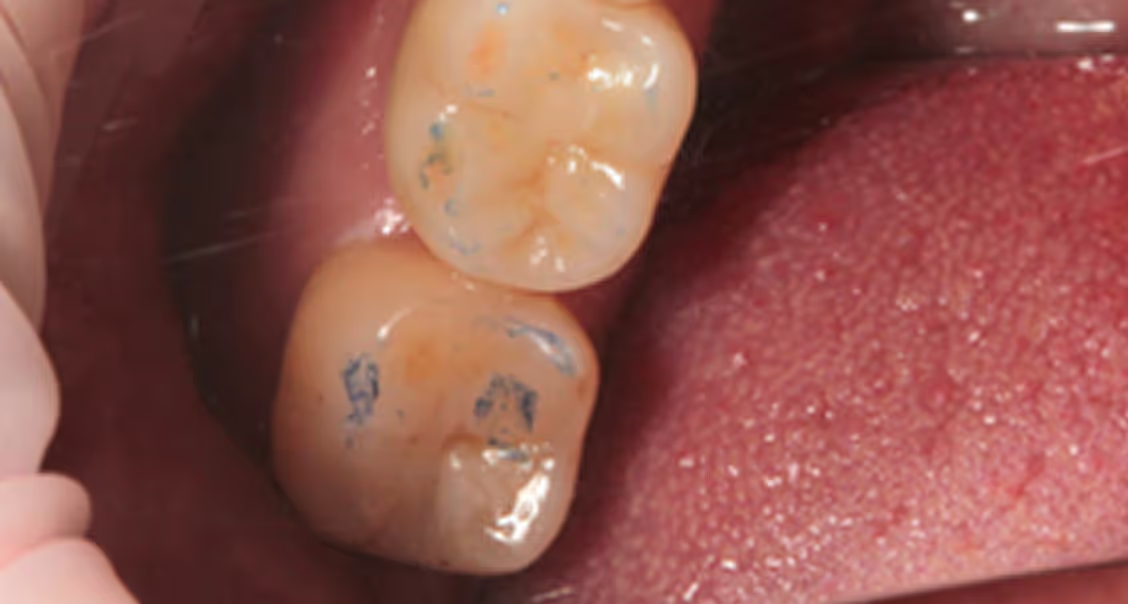
The patient came in with complaints of discomfort in the area of tooth 46 and impaired chewing function. The tooth had previously been covered with a crown.
After removing the prosthetic restoration and the carious tissue, a deep root fracture was found.
Clinical situation:
- vertical tooth fracture
- destruction of hard tissues
- unfavorable prognosis for preservation
The tooth could not be treated further. Extraction of tooth 46 with subsequent implantation was recommended.
Oral surgery Przed/Po
The patient came in with complaints about the aesthetic imperfections of the smile and missing teeth.
After comprehensive diagnostics, an individual plan for total smile rehabilitation was developed.
The treatment included:
- full therapeutic sanitation of the oral cavity
- surgical stage of treatment under sedation
- placement of dental implants
- implant prosthetics with zirconia crowns
- creation of highly esthetic ceramic restorations in the anterior area
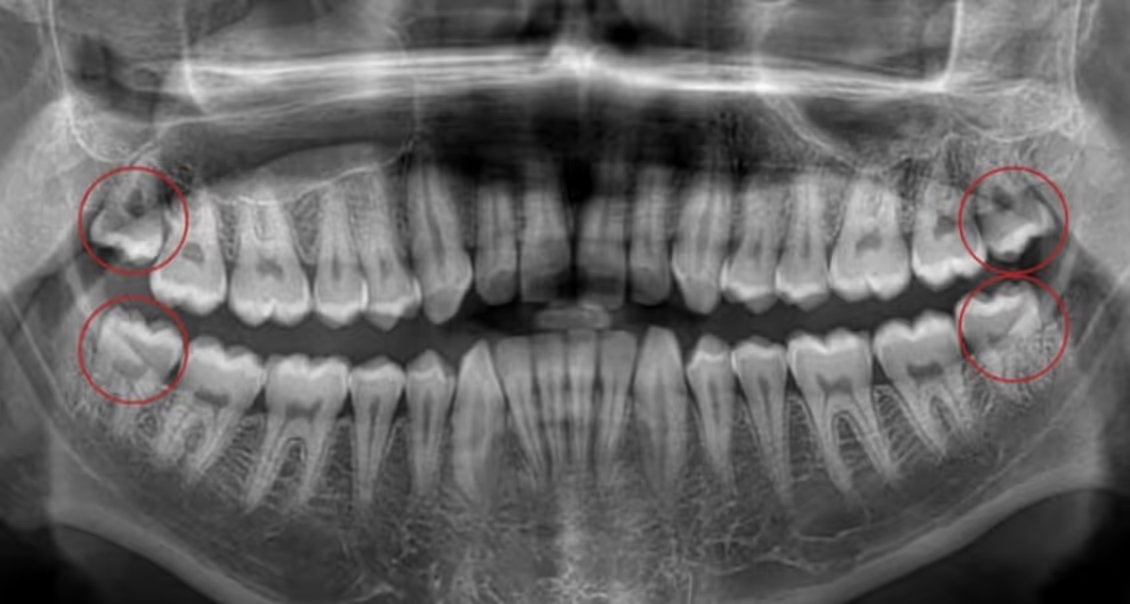
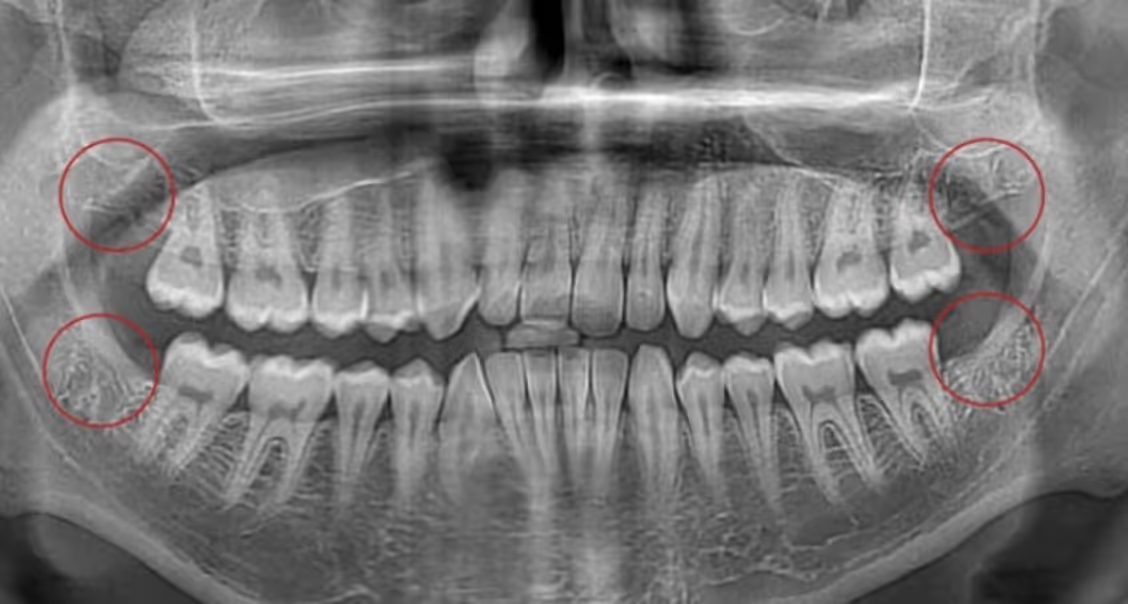
The patient came to the clinic with complaints of periodic pain and discomfort in the back teeth area, as well as concerns about the complexity and painfulness of the surgical procedure.
X-ray examination showed:
- incorrect position of the wisdom teeth in the bone
- partial or complete impaction of the teeth in the bone tissue
- pressure on the second molars
Given the scope of the procedure and the patient's psychological state, removal of the wisdom teeth under sedation was recommended.
Book an appointment!
Leave your contact details in the form or message us on your preferred messenger — we'll be happy to answer your questions and help you book a visit.


