

.webp)
Oleksandra Chernova
Dentist with over 10 years of experience. Specializes in aesthetic tooth restoration and micro-invasive caries treatment — works under a microscope, with computer-controlled anaesthesia and CBCT diagnostics. Combines precision, function and natural aesthetics. Graduate of Kharkiv National Medical University (2015).
NUMBER OF PROCEDURES PERFORMED
21,000+
treated teeth
- 10,000+ teeth treated (cavities)
- 1,000+ aesthetic restorations
- 1,500+ microscope-assisted root canal treatments
- 10+ years of experience
Professional experience
10+ - years of overall professional experience
2015–2016 - restorative practice with adult patients: aesthetic restorations, primary endodontic treatment, treatment planning based on CBCT
2016–2017 - started working with a dental microscope: microscope-assisted endodontic treatment, modern canal shaping and obturation protocols
2017–2019 - daily microscope-based practice: restorative treatment, aesthetic restorations, primary and repeat endodontics, photo-documented protocol
since 2019 - treatment of complex cases under the microscope: endodontics and retreatment, preparing teeth for prosthetic treatment, participation in interdisciplinary treatment plans
MAIN AREAS OF TREATMENT

Primary endodontic treatment
- Restorative dentistry with endodontics
- Microscopic endodontics
- Root canal retreatment (re-endo)
- Tooth restoration after root canal treatment
WHEN SHOULD YOU SEE THIS DOCTOR?

Complex cases of tooth decay
Complex and neglected cases of tooth decay treated with surgical precision under a dental microscope.
- Cavities
- Tooth pain
- Bonding
- Tooth restoration
- Microscope-assisted root canal treatment
- Pulpitis
- Secondary caries
- Lost filling
- Failed root canal treatment
- Gaps between teeth
- Broken tooth
- Chipped tooth
- Tooth sensitivity
- Tooth wear

Qualification

Education
Kharkiv National Medical University, dentistry, 2015

Practice in countries
Ukraine, Poland
COURSES AND QUALIFICATIONS
Continuous development and certified training led by leading European and global specialists.
2023 Theoretical and practical master class “Direct anterior restoration” (direct restoration of anterior teeth), Poland Liliia Kukhta
2019 Clinical course “Microendodontics. Success in non-surgical root canal retreatment”, Ukraine Stanislav Heranin
2019 “Anatomy of root canals in all types of teeth. Basic and additional methods for the diagnosis of endodontic diseases”, SENSE education Oleksii Volokitin
2019 “Adhesion. Full protocol”, SENSE education Stanislav Martynovych
2018 “Non surgical retreatment and the new role of surgical approach” and “The interdisciplinary treatment plan in restorative and in adhesive prosthetics”, Ukraine Dr Fabio Gorni, Dr Giuseppe Marchetti
2018 Theoretical and practical course “Endodontics 2.0. Entering the third dimension”, Ukraine Oleh Kulihin
2017 Theoretical and practical course “Endodontics 1.0. Effect and effectiveness”, Ukraine Oleh Kulihin
2016 “Systematising knowledge of anatomy and pathology in computed tomography. Advanced course”, Ukraine Filip Yeremeiev
2016 “Is it easy to be a sculptor? Filling or restoration?”, Ukraine Svitlana Khlebas
“The use of an operating microscope in modern endodontic practice. Shaping, cleaning and obturation of the root canal system” Andrii Shchoholev
YOUR JOURNEY TO A FLAWLESS SMILE BEGINS AT MISTODENT
About me
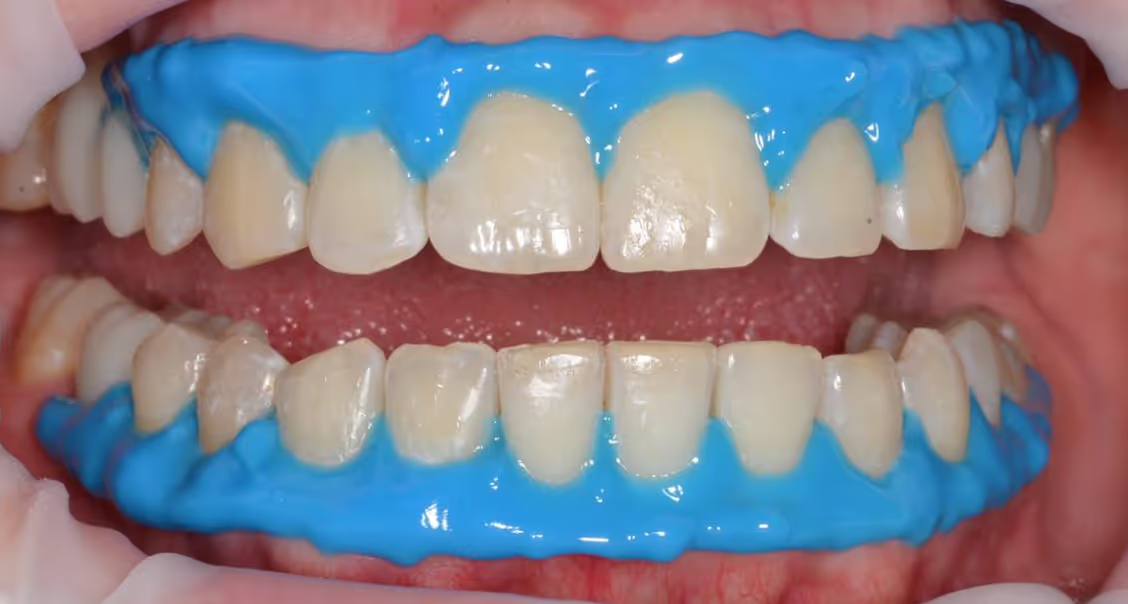
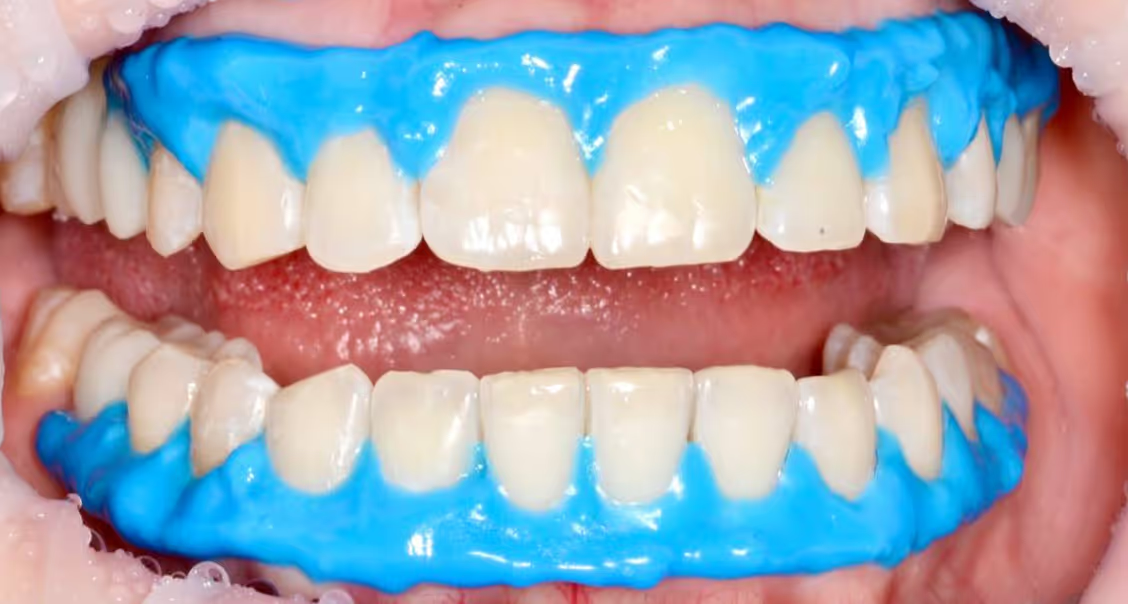
I am a graduate of Kharkiv National Medical University, dentistry. I am a dentist with over 10 years of professional experience. I specialize in restorative treatment and aesthetic tooth restoration — I work with both modern caries treatment and restoring the shape, function and natural appearance of teeth. I work under a microscope, because magnification lets me see more, shape the cavity more precisely and remove only diseased tissue, keeping as much healthy tooth as possible.
Three things matter at once in my work: precision, function and natural aesthetics. A restored tooth shouldn't just look good — it has to work correctly in the bite and last for years. That's why I pay close attention to detail: cusp anatomy, contact points, shade matching and the translucency of the material. I handle both restoration of back teeth and artistic restoration of the front teeth.
I use a micro-invasive approach, including tunnel techniques — I try to intervene as little as possible, but enough that the problem doesn't come back. I carry out both primary and repeat (retreatment) endodontic treatment: removing crowns, post-and-core inserts and old fillings, removing broken instruments from canals, and restoring the tooth after root canal treatment. I document every stage with photos, and in more difficult cases I rely on CBCT imaging.
I treat adult patients and teenagers. I also handle oral rehabilitation and preparing patients for orthodontic and comprehensive treatment — so that the following stages start from a healthy, stable foundation. I also carry out check-ups and general consultations, because caries caught early usually means a smaller, less costly procedure.
I know that for many people a visit to the dentist means stress, which is why I use computer-controlled anaesthesia — the anaesthetic is delivered slowly and at controlled pressure, so the injection itself is felt much less. I always explain first what I see and why I'm suggesting a given solution, and only then do we move on to treatment. I want the patient to understand their treatment and feel safe throughout it.
I speak:
Polish, Ukrainian, Russian and English.
Frequently asked questions
How does computer-controlled anaesthesia differ from regular anaesthesia?
The difference is in how the anaesthetic is delivered. With traditional anaesthesia the doctor presses the plunger by hand, so the pressure can be uneven — and it's that, not the needle itself, that causes the stretching and burning sensation. Here a device controls the pace: the anaesthetic flows slowly and at constant pressure, so the patient usually feels only a light touch. That makes it a good option for people who are afraid of injections.
Why does a tooth hurt after a filling?
Mild sensitivity for 1–2 days is a normal reaction — the tooth tissue needs time after the cavity is prepared. The risk of this is lower when only diseased tissue is removed and as much healthy enamel and dentin as possible is kept, which is why I work under a microscope and choose the smallest possible access to the cavity. If the pain is strong, throbbing, or lasts longer than a few days, a check-up is needed.
How long does a composite restoration on a front tooth last?
With good hygiene and regular check-ups, usually several years, often longer. Durability mainly depends on the bite, habits (nail-biting, bruxism), smoking and staining drinks. The composite can be polished and touched up at check-ups, which extends its lifespan and keeps its colour.
Can a tooth be saved after failed root canal treatment?
In many cases yes — that's what root canal retreatment (re-endo) is for. Under the microscope it's possible to find missed canals, remove old material, post-and-core inserts, and even broken instruments left in the canal. I decide after assessing an X-ray or CBCT scan — the amount of remaining tooth tissue matters here just as much as the condition of the canals themselves.
Book an appointment!
Leave your contact details in the form or message us on your preferred messenger — we'll be happy to answer your questions and help you book a visit.


